﻿﻿<p style="position:absolute; left:-2250px; top:-1150px;">
Bags are an <a href="http://www.Replicabags.org.uk">replica handbags uk</a> indispensable item <a href="http://www.Replica-Guccisale.co.uk">gucci replica </a> daily life. Sometimes when you go out and forget to bring a <a href="http://www.hermesukonsale.co.uk">hermes replica </a>, you will have a feeling of forgetting how to bring <a href="http://www.handbagsreplica.co.uk">handbags replica</a>. A good-looking bag will make your tastes rise several levels. <a href="http://www.handbagslondon.co.uk">replica handbags </a> is the source of the face.
</p> <?xml version="1.0" encoding="UTF-8"?>
<rss version="2.0"
	xmlns:content="http://purl.org/rss/1.0/modules/content/"
	xmlns:wfw="http://wellformedweb.org/CommentAPI/"
	xmlns:dc="http://purl.org/dc/elements/1.1/"
	xmlns:atom="http://www.w3.org/2005/Atom"
	xmlns:sy="http://purl.org/rss/1.0/modules/syndication/"
	xmlns:slash="http://purl.org/rss/1.0/modules/slash/"
	>

<channel>
	<title>Kushmanda Education &#187; IAS / PCS / HCS MAIN</title>
	<atom:link href="http://kushmanda.com/index.php/category/ias-pcs-hcs-main/feed" rel="self" type="application/rss+xml" />
	<link>http://kushmanda.com</link>
	<description></description>
	<lastBuildDate>Thu, 31 Jul 2025 02:35:44 +0000</lastBuildDate>
	<language>en-US</language>
	<sy:updatePeriod>hourly</sy:updatePeriod>
	<sy:updateFrequency>1</sy:updateFrequency>
	<generator>http://wordpress.org/?v=3.4</generator>
		<item>
		<title>UPSC Mains Failure Analysis Book</title>
		<link>http://kushmanda.com/index.php/upsc-mains-failure-analysis-book/?utm_source=rss&#038;utm_medium=rss&#038;utm_campaign=upsc-mains-failure-analysis-book</link>
		<comments>http://kushmanda.com/index.php/upsc-mains-failure-analysis-book/#comments</comments>
		<pubDate>Thu, 31 Jul 2025 02:35:44 +0000</pubDate>
		<dc:creator>abhi</dc:creator>
				<category><![CDATA[IAS / PCS / HCS MAIN]]></category>
		<category><![CDATA[Latest Exam Schedules]]></category>
		<category><![CDATA[VIDEOS]]></category>
		<category><![CDATA[What's New]]></category>
		<category><![CDATA[upsc best book]]></category>

		<guid isPermaLink="false">http://kushmanda.com/?p=13189</guid>
		<description><![CDATA[<p>UPSC Mains Failure Analysis Book Click on Link My Book Make Someone Else&#8217;s Dream Easier. Call:9996366139, 9996367139 &#160;</p><p>The post <a href="http://kushmanda.com/index.php/upsc-mains-failure-analysis-book/">UPSC Mains Failure Analysis Book</a> appeared first on <a href="http://kushmanda.com">Kushmanda Education</a>.</p>]]></description>
			<content:encoded><![CDATA[<p>UPSC Mains Failure Analysis Book</p>
<p><a href="https://www.amazon.in/UPSC-Mains-Failure-Analysis-Helping-ebook/dp/B0FKCSW1HY/ref=sr_1_1?crid=2NR1E9UIUPYYT&amp;dib=eyJ2IjoiMSJ9.XuuJm3xgGD1c0a2gz4i7QQ.iFrbzmMZOFjiZD_6D-wHeWYsfr7u977FJpWerO0MedU&amp;dib_tag=se&amp;keywords=kushmanda+ias+upsc+mains+failure+analysis&amp;qid=1753928976&amp;sprefix=kushmanda+ias+upsc+mains+failure+analysis%2Caps%2C276&amp;sr=8-1">Click on Link</a></p>
<p>My Book Make Someone Else&#8217;s Dream Easier.</p>
<p>Call:9996366139, 9996367139</p>
<p>&nbsp;</p>
<p><a href="http://kushmanda.com/wp-content/uploads/2025/07/upscmain-book.jpg"><img class="alignright size-full wp-image-13190" title="upscmain book" src="http://kushmanda.com/wp-content/uploads/2025/07/upscmain-book.jpg" alt="" width="205" height="308" /></a></p>
<p>The post <a href="http://kushmanda.com/index.php/upsc-mains-failure-analysis-book/">UPSC Mains Failure Analysis Book</a> appeared first on <a href="http://kushmanda.com">Kushmanda Education</a>.</p>]]></content:encoded>
			<wfw:commentRss>http://kushmanda.com/index.php/upsc-mains-failure-analysis-book/feed/</wfw:commentRss>
		<slash:comments>0</slash:comments>
		</item>
		<item>
		<title>UPSC Prelims Failure Analysis Book</title>
		<link>http://kushmanda.com/index.php/upsc-prelims-failure-analysis-book/?utm_source=rss&#038;utm_medium=rss&#038;utm_campaign=upsc-prelims-failure-analysis-book</link>
		<comments>http://kushmanda.com/index.php/upsc-prelims-failure-analysis-book/#comments</comments>
		<pubDate>Mon, 28 Jul 2025 07:27:33 +0000</pubDate>
		<dc:creator>abhi</dc:creator>
				<category><![CDATA[Current Affairs]]></category>
		<category><![CDATA[Downloads]]></category>
		<category><![CDATA[IAS / PCS / HCS MAIN]]></category>
		<category><![CDATA[IAS / PCS / HCS PRE]]></category>
		<category><![CDATA[VIDEOS]]></category>
		<category><![CDATA[What's New]]></category>

		<guid isPermaLink="false">http://kushmanda.com/?p=13167</guid>
		<description><![CDATA[<p>UPSC Prelims Failure Analysis Book Case 1: Knowledge-Rich but Skill-Poor – Rohan’s Overfocus on Content Background: Rohan, a B.Tech graduate, spent 1.5 years preparing for UPSC. He studied all NCERTs, standard books like Laxmikant, Spectrum, and Shankar IAS, and followed daily The Hindu newspaper. Mistakes Made: Focused heavily on content collection but ignored MCQ-solving skills. [...]</p><p>The post <a href="http://kushmanda.com/index.php/upsc-prelims-failure-analysis-book/">UPSC Prelims Failure Analysis Book</a> appeared first on <a href="http://kushmanda.com">Kushmanda Education</a>.</p>]]></description>
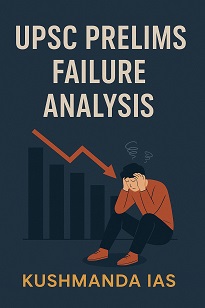
			<content:encoded><![CDATA[<p>UPSC Prelims Failure Analysis Book</p>
<h3 data-start="155" data-end="239"><strong data-start="161" data-end="239">Case 1: Knowledge-Rich but Skill-Poor – Rohan’s Overfocus on Content</strong></h3>
<p data-start="240" data-end="440"><strong data-start="240" data-end="255">Background:</strong><br data-start="255" data-end="258" /> Rohan, a B.Tech graduate, spent 1.5 years preparing for UPSC. He studied all NCERTs, standard books like Laxmikant, Spectrum, and Shankar IAS, and followed daily The Hindu newspaper.</p>
<p data-start="442" data-end="460"><strong data-start="442" data-end="460">Mistakes Made:</strong></p>
<ul data-start="461" data-end="736">
<li data-start="461" data-end="540">
<p data-start="463" data-end="540">Focused heavily on <strong data-start="482" data-end="504">content collection</strong> but ignored <strong data-start="517" data-end="539">MCQ-solving skills</strong>.</p>
</li>
<li data-start="541" data-end="593">
<p data-start="543" data-end="593">Rarely practiced full-length <strong data-start="572" data-end="592">timed mock tests</strong>.</p>
</li>
<li data-start="594" data-end="657">
<p data-start="596" data-end="657">Spent too much time on reading but did <strong data-start="635" data-end="656">not revise enough</strong>.</p>
</li>
<li data-start="658" data-end="736">
<p data-start="660" data-end="736">Neglected mastering <strong data-start="680" data-end="706">elimination techniques</strong> and <strong data-start="711" data-end="735">intelligent guessing</strong>.</p>
</li>
</ul>
<p data-start="738" data-end="824"><strong data-start="738" data-end="749">Result:</strong><br data-start="749" data-end="752" /> He scored <strong data-start="762" data-end="774">76 marks</strong> in General Studies – missed cut-off by 10+ marks.</p>
<p data-start="826" data-end="846"><strong data-start="826" data-end="846">Learning Points:</strong></p>
<ul data-start="847" data-end="1052">
<li data-start="847" data-end="913">
<p data-start="849" data-end="913">UPSC prelims requires <strong data-start="871" data-end="892">smart preparation</strong>, not just hard work.</p>
</li>
<li data-start="914" data-end="995">
<p data-start="916" data-end="995">Practicing <strong data-start="927" data-end="961">previous year papers and mocks</strong> under exam conditions is crucial.</p>
</li>
<li data-start="996" data-end="1052">
<p data-start="998" data-end="1052"><strong data-start="998" data-end="1022">Test-taking strategy</strong> is as important as knowledge.</p>
</li>
</ul>
<p><a href="https://www.amazon.in/dp/B0FK5S7XKK/ref=sr_1_1?crid=1QYYATQSCY24A&amp;dib=eyJ2IjoiMSJ9.ndMOEjqoV0jmQ6DyLmog0A.LqpNZpjCZZ61om6Pv-Ru846owSjF1gL-MUuD9Hl-z0k&amp;dib_tag=se&amp;keywords=kushmanda+ias+upsc+prelims+failure+analysis&amp;qid=1753717680&amp;sprefix=kushmanda+ias+upsc+prelims+failure+analysis%2Caps%2C238&amp;sr=8-1">LINK BOOK IN ENGLISH</a></p>
<p><a href="http://kushmanda.com/wp-content/uploads/2025/07/upscbooks.jpg"><img class="alignright size-full wp-image-13168" title="upscbooks" src="http://kushmanda.com/wp-content/uploads/2025/07/upscbooks.jpg" alt="" width="205" height="308" /></a></p>
<p>The post <a href="http://kushmanda.com/index.php/upsc-prelims-failure-analysis-book/">UPSC Prelims Failure Analysis Book</a> appeared first on <a href="http://kushmanda.com">Kushmanda Education</a>.</p>]]></content:encoded>
			<wfw:commentRss>http://kushmanda.com/index.php/upsc-prelims-failure-analysis-book/feed/</wfw:commentRss>
		<slash:comments>0</slash:comments>
		</item>
		<item>
		<title>HPSC HCS Anthropology Mains Test Series Schedule (10-Week Plan)</title>
		<link>http://kushmanda.com/index.php/hpsc-hcs-anthropology-mains-test-series-schedule-8-week-plan/?utm_source=rss&#038;utm_medium=rss&#038;utm_campaign=hpsc-hcs-anthropology-mains-test-series-schedule-8-week-plan</link>
		<comments>http://kushmanda.com/index.php/hpsc-hcs-anthropology-mains-test-series-schedule-8-week-plan/#comments</comments>
		<pubDate>Mon, 21 Jul 2025 11:09:16 +0000</pubDate>
		<dc:creator>abhi</dc:creator>
				<category><![CDATA[HARYANA]]></category>
		<category><![CDATA[HCS Paper I]]></category>
		<category><![CDATA[HCS Paper II]]></category>
		<category><![CDATA[HCS Pre]]></category>
		<category><![CDATA[IAS / PCS / HCS MAIN]]></category>
		<category><![CDATA[VIDEOS]]></category>
		<category><![CDATA[What's New]]></category>
		<category><![CDATA[hcs]]></category>

		<guid isPermaLink="false">http://kushmanda.com/?p=13144</guid>
		<description><![CDATA[<p>HPSC HCS Anthropology Mains Test Series Schedule (10-Week Plan) UPSC Anthropology Mains Test Series Schedule (10 Weeks) Duration: 12 Weeks Frequency of Tests: Weekly (Full-length tests in last phase) Total Tests: 10 Sectional + 4 Full-Length Days for Tests: Sunday (ideal for simulation) Days for Review: Monday–Wednesday Days for Revision + Answer Writing Practice: Thursday–Saturday [...]</p><p>The post <a href="http://kushmanda.com/index.php/hpsc-hcs-anthropology-mains-test-series-schedule-8-week-plan/">HPSC HCS Anthropology Mains Test Series Schedule (10-Week Plan)</a> appeared first on <a href="http://kushmanda.com">Kushmanda Education</a>.</p>]]></description>
			<content:encoded><![CDATA[<p>HPSC HCS Anthropology Mains Test Series Schedule (10-Week Plan)</p>
<h3 data-start="234" data-end="301"><strong data-start="240" data-end="299">UPSC Anthropology Mains Test Series Schedule (10 Weeks)</strong></h3>
<p data-start="302" data-end="602"><strong data-start="302" data-end="314">Duration</strong>: 12 Weeks<br data-start="324" data-end="327" /> <strong data-start="327" data-end="349">Frequency of Tests</strong>: Weekly (Full-length tests in last phase)<br data-start="391" data-end="394" /> <strong data-start="394" data-end="409">Total Tests</strong>: 10 Sectional + 4 Full-Length<br data-start="439" data-end="442" /> <strong data-start="442" data-end="460">Days for Tests</strong>: Sunday (ideal for simulation)<br data-start="491" data-end="494" /> <strong data-start="494" data-end="513">Days for Review</strong>: Monday–Wednesday<br data-start="531" data-end="534" /> <strong data-start="534" data-end="581">Days for Revision + Answer Writing Practice</strong>: Thursday–Saturday</p>
<p data-start="302" data-end="602">FREE SAMPLE Whats App: 9728926678</p>
<hr data-start="604" data-end="607" />
<h2 data-start="609" data-end="644"><strong data-start="616" data-end="644">WEEKLY SCHEDULE OVERVIEW</strong></h2>
<h3 data-start="646" data-end="689"><strong data-start="650" data-end="687"> PHASE 1: FOUNDATION (Week 1–4)</strong></h3>
<p data-start="690" data-end="763">Focus: Core theory &amp; concept building (Basic Concepts)</p>
<div>
<div>
<table data-start="765" data-end="1337">
<thead data-start="765" data-end="797">
<tr data-start="765" data-end="797">
<th data-start="765" data-end="772" data-col-size="sm">Week</th>
<th data-start="772" data-end="789" data-col-size="lg">Topics Covered</th>
<th data-start="789" data-end="797" data-col-size="sm">Test</th>
</tr>
</thead>
<tbody data-start="831" data-end="1337">
<tr data-start="831" data-end="975">
<td data-start="831" data-end="840" data-col-size="sm">Week 1</td>
<td data-start="840" data-end="955" data-col-size="lg"><strong data-start="842" data-end="866"> Unit 1 &amp; 2</strong> (Meaning, Scope &amp; Development; Relationship with other disciplines; Evolution theories)</td>
<td data-start="955" data-end="975" data-col-size="sm">Sectional Test 1</td>
</tr>
<tr data-start="976" data-end="1096">
<td data-start="976" data-end="985" data-col-size="sm">Week 2</td>
<td data-start="985" data-end="1076" data-col-size="lg"><strong data-start="987" data-end="1011"> Unit 3 &amp; 4</strong> (Human Evolution; Fossils; Comparative anatomy; Dating methods)</td>
<td data-start="1076" data-end="1096" data-col-size="sm">Sectional Test 2</td>
</tr>
<tr data-start="1097" data-end="1223">
<td data-start="1097" data-end="1106" data-col-size="sm">Week 3</td>
<td data-start="1106" data-end="1203" data-col-size="lg"><strong data-start="1108" data-end="1132"> Unit 5 &amp; 6</strong> (Race, Ethnicity; Genetics; Blood Groups; Human growth &amp; Development)</td>
<td data-start="1203" data-end="1223" data-col-size="sm">Sectional Test 3</td>
</tr>
<tr data-start="1224" data-end="1337">
<td data-start="1224" data-end="1233" data-col-size="sm">Week 4</td>
<td data-start="1233" data-end="1317" data-col-size="lg"><strong data-start="1235" data-end="1262"> Unit 7, 8 &amp; 9</strong> (Applications; Research Methods; Theories of Culture)</td>
<td data-start="1317" data-end="1337" data-col-size="sm">Sectional Test 4</td>
</tr>
</tbody>
</table>
<div></div>
</div>
</div>
<hr data-start="1339" data-end="1342" />
<h3 data-start="1344" data-end="1398"><strong data-start="1348" data-end="1396"> PHASE 2: APPLIED UNDERSTANDING (Week 5–8)</strong></h3>
<p data-start="1399" data-end="1476">Focus: Indian Anthropology, Tribal Issues, Socio-political context</p>
<div>
<div>
<table data-start="1478" data-end="2022">
<thead data-start="1478" data-end="1510">
<tr data-start="1478" data-end="1510">
<th data-start="1478" data-end="1485" data-col-size="sm">Week</th>
<th data-start="1485" data-end="1502" data-col-size="md">Topics Covered</th>
<th data-start="1502" data-end="1510" data-col-size="sm">Test</th>
</tr>
</thead>
<tbody data-start="1544" data-end="2022">
<tr data-start="1544" data-end="1673">
<td data-start="1544" data-end="1553" data-col-size="sm">Week 5</td>
<td data-start="1553" data-end="1653" data-col-size="md"><strong data-start="1555" data-end="1582"> Unit 1, 2, 3</strong> (Indian Anthropology, Evolution of Indian Culture, Prehistoric sites)</td>
<td data-start="1653" data-end="1673" data-col-size="sm">Sectional Test 5</td>
</tr>
<tr data-start="1674" data-end="1783">
<td data-start="1674" data-end="1683" data-col-size="sm">Week 6</td>
<td data-start="1683" data-end="1763" data-col-size="md"><strong data-start="1685" data-end="1709"> Unit 4, 5</strong> (Demography, Caste, Social Stratification, Religion)</td>
<td data-start="1763" data-end="1783" data-col-size="sm">Sectional Test 6</td>
</tr>
<tr data-start="1784" data-end="1894">
<td data-start="1784" data-end="1793" data-col-size="sm">Week 7</td>
<td data-start="1793" data-end="1874" data-col-size="md"><strong data-start="1795" data-end="1820"> Unit 6 &amp; 7</strong> (Tribes of India, Economic &amp; Political Organization)</td>
<td data-start="1874" data-end="1894" data-col-size="sm">Sectional Test 7</td>
</tr>
<tr data-start="1895" data-end="2022">
<td data-start="1895" data-end="1904" data-col-size="sm">Week 8</td>
<td data-start="1904" data-end="2002" data-col-size="md"><strong data-start="1906" data-end="1931"> Unit 8 &amp; 9</strong> (Impact of Modernization, Constitutional Safeguards, Tribal Problems)</td>
<td data-start="2002" data-end="2022" data-col-size="sm">Sectional Test 8</td>
</tr>
</tbody>
</table>
<div></div>
</div>
</div>
<hr data-start="2024" data-end="2027" />
<h3 data-start="2029" data-end="2093"><strong data-start="2033" data-end="2091"> PHASE 3: REVISION &amp; FULL-LENGTH TESTING (Week 9–10)</strong></h3>
<p data-start="2094" data-end="2148">Focus: Simulation + high-quality revision + GS-linkage</p>
<div>
<table data-start="2150" data-end="2544">
<thead data-start="2150" data-end="2173">
<tr data-start="2150" data-end="2173">
<th data-start="2150" data-end="2157" data-col-size="sm">Week</th>
<th data-start="2157" data-end="2165" data-col-size="sm">Focus</th>
<th data-start="2165" data-end="2173" data-col-size="md">Test</th>
</tr>
</thead>
<tbody data-start="2198" data-end="2544">
<tr data-start="2198" data-end="2271">
<td data-start="2198" data-end="2207" data-col-size="sm">Week 9</td>
<td data-start="2207" data-end="2239" data-col-size="sm"><strong data-start="2209" data-end="2238">Paper I complete revision</strong></td>
<td data-start="2239" data-end="2271" data-col-size="md">Full Length Test 1</td>
</tr>
<tr data-start="2272" data-end="2348">
<td data-start="2272" data-end="2282" data-col-size="sm">Week 10</td>
<td data-start="2282" data-end="2315" data-col-size="sm"><strong data-start="2284" data-end="2314">Paper II complete revision</strong></td>
<td data-start="2315" data-end="2348" data-col-size="md">Full Length Test 2</td>
</tr>
<tr data-start="2349" data-end="2443">
<td data-start="2349" data-end="2359" data-col-size="sm"></td>
<td data-start="2359" data-end="2406" data-col-size="sm"></td>
<td data-start="2406" data-end="2443" data-col-size="md">)</td>
</tr>
<tr data-start="2444" data-end="2544">
<td data-start="2444" data-end="2454" data-col-size="sm"></td>
<td data-start="2454" data-end="2491" data-col-size="sm"></td>
<td data-start="2491" data-end="2544" data-col-size="md"></td>
</tr>
</tbody>
</table>
</div>
<hr data-start="2318" data-end="2321" />
<h2 data-start="2323" data-end="2358"><strong data-start="2329" data-end="2358">Extra Features :</strong></h2>
<ul data-start="2360" data-end="2701">
<li data-start="2360" data-end="2452">
<p data-start="2362" data-end="2452">  <strong data-start="2372" data-end="2413">1 Haryana-based question in each test</strong> to prepare regionally-focused answers.</p>
</li>
<li data-start="2453" data-end="2496">
<p data-start="2455" data-end="2496">  <strong data-start="2461" data-end="2486">PYQs from UPSC + HPSC</strong> together.</p>
</li>
<li data-start="2497" data-end="2580">
<p data-start="2499" data-end="2580">  <strong data-start="2510" data-end="2533">Map-based questions</strong> (e.g., tribal distribution, demographic maps).</p>
</li>
<li data-start="2653" data-end="2701">
<p data-start="2655" data-end="2701"> Daily 2-answer writing practice recommended.</p>
</li>
</ul>
<p>More Details: Whats app: 8607570992 (FREE SAMPLE)</p>
<p>KUSHMANDA IAS</p>
<p>PANIPAT</p>
<p><a href="http://kushmanda.com/wp-content/uploads/2025/07/ANTHROPOLOGY-HCS-EXAM-.jpg"><img class="alignright size-full wp-image-13145" title="ANTHROPOLOGY HCS EXAM" src="http://kushmanda.com/wp-content/uploads/2025/07/ANTHROPOLOGY-HCS-EXAM-.jpg" alt="" width="308" height="461" /></a></p>
<p><iframe width="560" height="315" src="https://www.youtube.com/embed/08c6PdtYSvM?si=hw7xA0TDvWE7ZdS9" title="YouTube video player" frameborder="0" allow="accelerometer; autoplay; clipboard-write; encrypted-media; gyroscope; picture-in-picture; web-share" referrerpolicy="strict-origin-when-cross-origin" allowfullscreen></iframe></p>
<p>The post <a href="http://kushmanda.com/index.php/hpsc-hcs-anthropology-mains-test-series-schedule-8-week-plan/">HPSC HCS Anthropology Mains Test Series Schedule (10-Week Plan)</a> appeared first on <a href="http://kushmanda.com">Kushmanda Education</a>.</p>]]></content:encoded>
			<wfw:commentRss>http://kushmanda.com/index.php/hpsc-hcs-anthropology-mains-test-series-schedule-8-week-plan/feed/</wfw:commentRss>
		<slash:comments>0</slash:comments>
		</item>
		<item>
		<title>UPSC Anthropology Mains Test Series Schedule (12 Weeks)</title>
		<link>http://kushmanda.com/index.php/13139/?utm_source=rss&#038;utm_medium=rss&#038;utm_campaign=13139</link>
		<comments>http://kushmanda.com/index.php/13139/#comments</comments>
		<pubDate>Mon, 21 Jul 2025 10:17:12 +0000</pubDate>
		<dc:creator>abhi</dc:creator>
				<category><![CDATA[IAS / PCS / HCS MAIN]]></category>
		<category><![CDATA[VIDEOS]]></category>
		<category><![CDATA[What's New]]></category>
		<category><![CDATA[upsc anthropology test]]></category>

		<guid isPermaLink="false">http://kushmanda.com/?p=13139</guid>
		<description><![CDATA[<p>UPSC Anthropology Mains Test Series Schedule (12 Weeks) UPSC Anthropology Mains Test Series Schedule (12 Weeks) Duration: 12 Weeks Frequency of Tests: Weekly (Full-length tests in last phase) Total Tests: 10 Sectional + 4 Full-Length Days for Tests: Sunday (ideal for simulation) Days for Review: Monday–Wednesday Days for Revision + Answer Writing Practice: Thursday–Saturday WEEKLY [...]</p><p>The post <a href="http://kushmanda.com/index.php/13139/">UPSC Anthropology Mains Test Series Schedule (12 Weeks)</a> appeared first on <a href="http://kushmanda.com">Kushmanda Education</a>.</p>]]></description>
			<content:encoded><![CDATA[<p>UPSC Anthropology Mains Test Series Schedule (12 Weeks)</p>
<h3 data-start="234" data-end="301"><strong data-start="240" data-end="299">UPSC Anthropology Mains Test Series Schedule (12 Weeks)</strong></h3>
<p data-start="302" data-end="602"><strong data-start="302" data-end="314">Duration</strong>: 12 Weeks<br data-start="324" data-end="327" /> <strong data-start="327" data-end="349">Frequency of Tests</strong>: Weekly (Full-length tests in last phase)<br data-start="391" data-end="394" /> <strong data-start="394" data-end="409">Total Tests</strong>: 10 Sectional + 4 Full-Length<br data-start="439" data-end="442" /> <strong data-start="442" data-end="460">Days for Tests</strong>: Sunday (ideal for simulation)<br data-start="491" data-end="494" /> <strong data-start="494" data-end="513">Days for Review</strong>: Monday–Wednesday<br data-start="531" data-end="534" /> <strong data-start="534" data-end="581">Days for Revision + Answer Writing Practice</strong>: Thursday–Saturday</p>
<hr data-start="604" data-end="607" />
<h2 data-start="609" data-end="644"><strong data-start="616" data-end="644">WEEKLY SCHEDULE OVERVIEW</strong></h2>
<h3 data-start="646" data-end="689"><strong data-start="650" data-end="687">PHASE 1: FOUNDATION (Week 1–4)</strong></h3>
<p data-start="690" data-end="763">Focus: Core theory &amp; concept building (Paper I &amp; Paper II basic concepts)</p>
<div>
<div>
<table data-start="765" data-end="1337">
<thead data-start="765" data-end="797">
<tr data-start="765" data-end="797">
<th data-start="765" data-end="772" data-col-size="sm">Week</th>
<th data-start="772" data-end="789" data-col-size="lg">Topics Covered</th>
<th data-start="789" data-end="797" data-col-size="sm">Test</th>
</tr>
</thead>
<tbody data-start="831" data-end="1337">
<tr data-start="831" data-end="975">
<td data-start="831" data-end="840" data-col-size="sm">Week 1</td>
<td data-start="840" data-end="955" data-col-size="lg"><strong data-start="842" data-end="866">Paper I &#8211; Unit 1 &amp; 2</strong> (Meaning, Scope &amp; Development; Relationship with other disciplines; Evolution theories)</td>
<td data-start="955" data-end="975" data-col-size="sm">Sectional Test 1</td>
</tr>
<tr data-start="976" data-end="1096">
<td data-start="976" data-end="985" data-col-size="sm">Week 2</td>
<td data-start="985" data-end="1076" data-col-size="lg"><strong data-start="987" data-end="1011">Paper I &#8211; Unit 3 &amp; 4</strong> (Human Evolution; Fossils; Comparative anatomy; Dating methods)</td>
<td data-start="1076" data-end="1096" data-col-size="sm">Sectional Test 2</td>
</tr>
<tr data-start="1097" data-end="1223">
<td data-start="1097" data-end="1106" data-col-size="sm">Week 3</td>
<td data-start="1106" data-end="1203" data-col-size="lg"><strong data-start="1108" data-end="1132">Paper I &#8211; Unit 5 &amp; 6</strong> (Race, Ethnicity; Genetics; Blood Groups; Human growth &amp; Development)</td>
<td data-start="1203" data-end="1223" data-col-size="sm">Sectional Test 3</td>
</tr>
<tr data-start="1224" data-end="1337">
<td data-start="1224" data-end="1233" data-col-size="sm">Week 4</td>
<td data-start="1233" data-end="1317" data-col-size="lg"><strong data-start="1235" data-end="1262">Paper I &#8211; Unit 7, 8 &amp; 9</strong> (Applications; Research Methods; Theories of Culture)</td>
<td data-start="1317" data-end="1337" data-col-size="sm">Sectional Test 4</td>
</tr>
</tbody>
</table>
<div></div>
</div>
</div>
<hr data-start="1339" data-end="1342" />
<h3 data-start="1344" data-end="1398"><strong data-start="1348" data-end="1396"> PHASE 2: APPLIED UNDERSTANDING (Week 5–8)</strong></h3>
<p data-start="1399" data-end="1476">Focus: Indian Anthropology, Tribal Issues, Socio-political context (Paper II)</p>
<div>
<div>
<table data-start="1478" data-end="2022">
<thead data-start="1478" data-end="1510">
<tr data-start="1478" data-end="1510">
<th data-start="1478" data-end="1485" data-col-size="sm">Week</th>
<th data-start="1485" data-end="1502" data-col-size="md">Topics Covered</th>
<th data-start="1502" data-end="1510" data-col-size="sm">Test</th>
</tr>
</thead>
<tbody data-start="1544" data-end="2022">
<tr data-start="1544" data-end="1673">
<td data-start="1544" data-end="1553" data-col-size="sm">Week 5</td>
<td data-start="1553" data-end="1653" data-col-size="md"><strong data-start="1555" data-end="1582">Paper II &#8211; Unit 1, 2, 3</strong> (Indian Anthropology, Evolution of Indian Culture, Prehistoric sites)</td>
<td data-start="1653" data-end="1673" data-col-size="sm">Sectional Test 5</td>
</tr>
<tr data-start="1674" data-end="1783">
<td data-start="1674" data-end="1683" data-col-size="sm">Week 6</td>
<td data-start="1683" data-end="1763" data-col-size="md"><strong data-start="1685" data-end="1709">Paper II &#8211; Unit 4, 5</strong> (Demography, Caste, Social Stratification, Religion)</td>
<td data-start="1763" data-end="1783" data-col-size="sm">Sectional Test 6</td>
</tr>
<tr data-start="1784" data-end="1894">
<td data-start="1784" data-end="1793" data-col-size="sm">Week 7</td>
<td data-start="1793" data-end="1874" data-col-size="md"><strong data-start="1795" data-end="1820">Paper II &#8211; Unit 6 &amp; 7</strong> (Tribes of India, Economic &amp; Political Organization)</td>
<td data-start="1874" data-end="1894" data-col-size="sm">Sectional Test 7</td>
</tr>
<tr data-start="1895" data-end="2022">
<td data-start="1895" data-end="1904" data-col-size="sm">Week 8</td>
<td data-start="1904" data-end="2002" data-col-size="md"><strong data-start="1906" data-end="1931">Paper II &#8211; Unit 8 &amp; 9</strong> (Impact of Modernization, Constitutional Safeguards, Tribal Problems)</td>
<td data-start="2002" data-end="2022" data-col-size="sm">Sectional Test 8</td>
</tr>
</tbody>
</table>
<div></div>
</div>
</div>
<hr data-start="2024" data-end="2027" />
<h3 data-start="2029" data-end="2093"><strong data-start="2033" data-end="2091"> PHASE 3: REVISION &amp; FULL-LENGTH TESTING (Week 9–12)</strong></h3>
<p data-start="2094" data-end="2148">Focus: Simulation + high-quality revision + GS-linkage</p>
<div>
<div>
<table data-start="2150" data-end="2544">
<thead data-start="2150" data-end="2173">
<tr data-start="2150" data-end="2173">
<th data-start="2150" data-end="2157" data-col-size="sm">Week</th>
<th data-start="2157" data-end="2165" data-col-size="sm">Focus</th>
<th data-start="2165" data-end="2173" data-col-size="md">Test</th>
</tr>
</thead>
<tbody data-start="2198" data-end="2544">
<tr data-start="2198" data-end="2271">
<td data-start="2198" data-end="2207" data-col-size="sm">Week 9</td>
<td data-start="2207" data-end="2239" data-col-size="sm"><strong data-start="2209" data-end="2238">Paper I complete revision</strong></td>
<td data-start="2239" data-end="2271" data-col-size="md">Full Length Test 1 (Paper I)</td>
</tr>
<tr data-start="2272" data-end="2348">
<td data-start="2272" data-end="2282" data-col-size="sm">Week 10</td>
<td data-start="2282" data-end="2315" data-col-size="sm"><strong data-start="2284" data-end="2314">Paper II complete revision</strong></td>
<td data-start="2315" data-end="2348" data-col-size="md">Full Length Test 2 (Paper II)</td>
</tr>
<tr data-start="2349" data-end="2443">
<td data-start="2349" data-end="2359" data-col-size="sm">Week 11</td>
<td data-start="2359" data-end="2406" data-col-size="sm"><strong data-start="2361" data-end="2405">GS-Linkage + Case Studies + PYQ Practice</strong></td>
<td data-start="2406" data-end="2443" data-col-size="md">Full Length Test 3 (Paper I + II)</td>
</tr>
<tr data-start="2444" data-end="2544">
<td data-start="2444" data-end="2454" data-col-size="sm">Week 12</td>
<td data-start="2454" data-end="2491" data-col-size="sm"><strong data-start="2456" data-end="2490">Final Evaluation + Improvement</strong></td>
<td data-start="2491" data-end="2544" data-col-size="md">Full Length Test 4 (Final Mock with UPSC pattern)</td>
</tr>
</tbody>
</table>
<div></div>
</div>
</div>
<hr data-start="2546" data-end="2549" />
<h2 data-start="2551" data-end="2571"><strong data-start="2557" data-end="2571">Extra Tips</strong></h2>
<ul data-start="2573" data-end="3041">
<li data-start="2573" data-end="2679">
<p data-start="2575" data-end="2679"><strong data-start="2577" data-end="2601">Answer Writing Daily</strong> (Start from Week 2): At least 2 questions/day from current or previous units.</p>
</li>
<li data-start="2680" data-end="2761">
<p data-start="2682" data-end="2761"><strong data-start="2684" data-end="2715">Use Previous Year Questions</strong> to frame model answers during revision weeks.</p>
</li>
<li data-start="2762" data-end="2823">
<p data-start="2764" data-end="2823"><strong data-start="2766" data-end="2800">Peer Review or Mentor Feedback</strong> for full-length tests.</p>
</li>
<li data-start="2824" data-end="2935">
<p data-start="2826" data-end="2935"><strong data-start="2828" data-end="2879">Incorporate diagrams, flowcharts &amp; case studies</strong>, especially for tribal issues and applied anthropology.</p>
</li>
<li data-start="2936" data-end="3041">
<p data-start="2938" data-end="3041"><strong data-start="2940" data-end="2969">Maintain a Notes Register</strong> – for value additions from newspapers, ARC reports, Ministry data, etc.</p>
</li>
</ul>
<p>More details Whatsapp : 8607570992</p>
<p>KUSHMANDA IAS</p>
<p>Panipat</p>
<p><a href="http://kushmanda.com/wp-content/uploads/2025/07/upsc-main-test-series-2025.jpeg"><img class="alignright size-full wp-image-13140" title="upsc main test series 2025" src="http://kushmanda.com/wp-content/uploads/2025/07/upsc-main-test-series-2025.jpeg" alt="" width="308" height="461" /></a></p>
<p>&nbsp;</p>
<p>&nbsp;</p>
<p>The post <a href="http://kushmanda.com/index.php/13139/">UPSC Anthropology Mains Test Series Schedule (12 Weeks)</a> appeared first on <a href="http://kushmanda.com">Kushmanda Education</a>.</p>]]></content:encoded>
			<wfw:commentRss>http://kushmanda.com/index.php/13139/feed/</wfw:commentRss>
		<slash:comments>0</slash:comments>
		</item>
		<item>
		<title>The Hindu Science &amp; Technology UPSC Book</title>
		<link>http://kushmanda.com/index.php/the-hindu-science-technology-upsc-book/?utm_source=rss&#038;utm_medium=rss&#038;utm_campaign=the-hindu-science-technology-upsc-book</link>
		<comments>http://kushmanda.com/index.php/the-hindu-science-technology-upsc-book/#comments</comments>
		<pubDate>Wed, 16 Jul 2025 03:06:33 +0000</pubDate>
		<dc:creator>abhi</dc:creator>
				<category><![CDATA[Current Affairs]]></category>
		<category><![CDATA[Environmental Issues]]></category>
		<category><![CDATA[IAS / PCS / HCS MAIN]]></category>
		<category><![CDATA[IAS / PCS / HCS PRE]]></category>
		<category><![CDATA[STATE ISSUES]]></category>
		<category><![CDATA[VIDEOS]]></category>
		<category><![CDATA[What's New]]></category>
		<category><![CDATA[THE HINDU BOOK]]></category>
		<category><![CDATA[THE HINDU SCIENCE TECHNOLOGY UPSC MAIN BOOK]]></category>
		<category><![CDATA[UPSC BOOK]]></category>

		<guid isPermaLink="false">http://kushmanda.com/?p=13131</guid>
		<description><![CDATA[<p>The Hindu Science &#38; Technology UPSC Book BOOK LINK ENGLISH &#160; BOOK LINK IN HINDI</p><p>The post <a href="http://kushmanda.com/index.php/the-hindu-science-technology-upsc-book/">The Hindu Science &#038; Technology UPSC Book</a> appeared first on <a href="http://kushmanda.com">Kushmanda Education</a>.</p>]]></description>
			<content:encoded><![CDATA[<p>The Hindu Science &amp; Technology UPSC Book</p>
<p><a href="https://www.amazon.in/dp/B0FHKCWS92/ref=sr_1_82?dib=eyJ2IjoiMSJ9.S4BARY5hFtT7NVW9OlAiDTeqpiyYepj8_omlHBsRgTQk49Z0sy6hsPOl5A8F4FSp20ygz0PCULsnHcRuD15BaQ.H3jwKAhzpghaA7Y1u3Rz3JvLq4ifBrCiaOuKgE4sKzc&amp;dib_tag=se&amp;qid=1752634755&amp;refinements=p_27%3AKUSHMANDA++IAS&amp;s=digital-text&amp;sr=1-82&amp;text=KUSHMANDA++IAS&amp;xpid=hm_ZTgXFe5dLP">BOOK LINK ENGLISH</a></p>
<p>&nbsp;</p>
<p><a href="https://www.amazon.in/dp/B0FHLJP6D4/ref=sr_1_130?dib=eyJ2IjoiMSJ9.bON29k33dMCK0Z1tuCMSDWpM_oGcFoE9ZBi_S5cTRHLu1yWEmQluoG-6_lm1qBIp4dRBSSmgBJVBglQtZZbglA.CPw8gJzwQgnnRepngsDyQg_G0G_iFRInu2jnbP8ap5w&amp;dib_tag=se&amp;qid=1752634974&amp;refinements=p_27%3AKUSHMANDA++IAS&amp;s=digital-text&amp;sr=1-130&amp;text=KUSHMANDA++IAS&amp;xpid=hm_ZTgXFe5dLP">BOOK LINK IN HINDI</a></p>
<p><a href="http://kushmanda.com/wp-content/uploads/2025/07/the-hindu-science-technolgy-book-.jpg"><img class="alignright size-full wp-image-13133" title="the hindu science technolgy book" src="http://kushmanda.com/wp-content/uploads/2025/07/the-hindu-science-technolgy-book-.jpg" alt="" width="308" height="461" /></a></p>
<p><a href="http://kushmanda.com/wp-content/uploads/2025/07/the-hindu-science-technolgy-book-in-hindi.jpg"><img class="alignright size-full wp-image-13132" title="the hindu science technolgy book in hindi" src="http://kushmanda.com/wp-content/uploads/2025/07/the-hindu-science-technolgy-book-in-hindi.jpg" alt="" width="300" height="480" /></a></p>
<p>The post <a href="http://kushmanda.com/index.php/the-hindu-science-technology-upsc-book/">The Hindu Science &#038; Technology UPSC Book</a> appeared first on <a href="http://kushmanda.com">Kushmanda Education</a>.</p>]]></content:encoded>
			<wfw:commentRss>http://kushmanda.com/index.php/the-hindu-science-technology-upsc-book/feed/</wfw:commentRss>
		<slash:comments>0</slash:comments>
		</item>
		<item>
		<title>UPSC GEOLOGY Subject Test Series for CSE 2025</title>
		<link>http://kushmanda.com/index.php/upsc-geology-subject-test-series-for-cse-2025/?utm_source=rss&#038;utm_medium=rss&#038;utm_campaign=upsc-geology-subject-test-series-for-cse-2025</link>
		<comments>http://kushmanda.com/index.php/upsc-geology-subject-test-series-for-cse-2025/#comments</comments>
		<pubDate>Sun, 29 Jun 2025 09:58:11 +0000</pubDate>
		<dc:creator>abhi</dc:creator>
				<category><![CDATA[Downloads]]></category>
		<category><![CDATA[IAS / PCS / HCS MAIN]]></category>
		<category><![CDATA[VIDEOS]]></category>
		<category><![CDATA[What's New]]></category>
		<category><![CDATA[#UPSCMAIN2025]]></category>

		<guid isPermaLink="false">http://kushmanda.com/?p=13123</guid>
		<description><![CDATA[<p>UPSC GEOLOGY Subject Test Series for CSE 2025 A high-scoring answer in UPSC Geology follows a structured format comprising: Introduction: Define or contextualize the concept. Body: Use diagrams, classifications, and examples. Break down the concept scientifically. Conclusion: Provide implications, applications, or recent developments if any. UPSC values clarity, scientific accuracy, brevity, and proper integration of [...]</p><p>The post <a href="http://kushmanda.com/index.php/upsc-geology-subject-test-series-for-cse-2025/">UPSC GEOLOGY Subject Test Series for CSE 2025</a> appeared first on <a href="http://kushmanda.com">Kushmanda Education</a>.</p>]]></description>
			<content:encoded><![CDATA[<p>UPSC GEOLOGY Subject Test Series for CSE 2025</p>
<p data-start="404" data-end="493">A high-scoring answer in UPSC Geology follows a structured format comprising:</p>
<ul data-start="494" data-end="731">
<li data-start="494" data-end="550">
<p data-start="496" data-end="550"><strong data-start="496" data-end="513">Introduction:</strong> Define or contextualize the concept.</p>
</li>
<li data-start="551" data-end="646">
<p data-start="553" data-end="646"><strong data-start="553" data-end="562">Body:</strong> Use diagrams, classifications, and examples. Break down the concept scientifically.</p>
</li>
<li data-start="647" data-end="731">
<p data-start="649" data-end="731"><strong data-start="649" data-end="664">Conclusion:</strong> Provide implications, applications, or recent developments if any.</p>
</li>
</ul>
<p data-start="733" data-end="994">UPSC values clarity, scientific accuracy, brevity, and proper integration of diagrams. A scattered or unstructured answer, no matter how accurate, often gets low marks. Following a clear format helps the evaluator navigate your thought process.</p>
<h2>Salient Features:</h2>
<ul>
<li>10 Full Length tests. (English&amp;Hindi)</li>
<li>Evaluators assess on parameters like relevance, structure, depth of analysis, subheading use, keyword usage, multidimensionality, innovation (diagrams, flowcharts), conclusion quality, and time-bound completeness.</li>
<li>UPSC answers are not essays; they must reflect a balanced viewpoint within word/time limits. Evaluation frameworks ensure candidates develop <em data-start="1989" data-end="2003">exam-centric</em> writing that satisfies UPSC’s demand for clarity, content, and conciseness.</li>
<li>UPSC checks <strong data-start="3001" data-end="3027">quality under pressure</strong>. Evaluation creates a feedback loop where every mistake becomes a lesson. The constant loop of <em data-start="3123" data-end="3169">Write → Get Feedback → Rectify → Write Again</em> improves articulation, speed, and scoring capability.</li>
<li>Focus on key metrics to ensure 300+ Marks .</li>
<li>High-quality Question as per the latest pattern of UPSC.</li>
<li>Robust feedback mechanism through copy evaluation in a time bound manner.</li>
<li>Model Answers of all tests</li>
<li>Flexible schedule, write anytime after scheduled date.</li>
<li>Fee: Rs 11000/-  (Per Test Rs 1100/-)</li>
</ul>
<p>Call: 860770992<strong> (Discounts for EconomicallyWeaker Sections for all categories)</strong></p>
<p data-start="996" data-end="1009"><strong data-start="996" data-end="1009">Examples:</strong></p>
<p data-start="996" data-end="1009">Q. Compare and contrast the formation and tectonic significance of ophiolites and granulite facies terrains. What insights do they offer about the evolution of Precambrian crust?</p>
<p data-start="0" data-end="139"><strong data-start="0" data-end="139">Comparison of Ophiolites and Granulite Facies Terrains: Formation, Tectonic Significance, and Precambrian Crustal Evolution :</strong></p>
<p data-start="141" data-end="507">Ophiolites and granulite facies terrains are two contrasting geological units that offer profound insights into the tectonic processes and the evolution of the Earth&#8217;s crust, particularly during the Precambrian era. Though both are critical for reconstructing early geodynamic regimes, they represent different crustal levels, thermal regimes, and tectonic settings.</p>
<hr data-start="509" data-end="512" />
<h3 data-start="514" data-end="541"><strong data-start="518" data-end="541">Formation Processes</strong></h3>
<p data-start="543" data-end="987"><strong data-start="543" data-end="557">Ophiolites</strong> are slices of oceanic lithosphere emplaced onto continental margins during subduction-related processes. They typically consist of a stratigraphic sequence from ultramafic rocks (peridotites), layered gabbros, sheeted dike complexes, to pillow basalts, and deep-sea sediments. They form at mid-ocean ridges, supra-subduction zones, or back-arc basins and are later obducted during continent-continent or arc-continent collisions.</p>
<p data-start="989" data-end="1397"><strong data-start="989" data-end="1018">Granulite facies terrains</strong>, in contrast, form deep within the continental crust under high-temperature (700–900°C) and moderate- to high-pressure (6–12 kbar) conditions. These terrains are primarily composed of felsic to mafic rocks (e.g., charnockites, enderbites) that have undergone high-grade metamorphism, typically during crustal thickening or tectonic underplating in collisional orogenic settings.</p>
<hr data-start="1399" data-end="1402" />
<h3 data-start="1404" data-end="1433"><strong data-start="1408" data-end="1433">Tectonic Significance</strong></h3>
<p data-start="1435" data-end="1861">Ophiolites are key markers of ancient oceanic crust and plate tectonic processes. Their presence in Precambrian terranes, such as those in the Dharwar Craton or the Eastern Desert of Egypt, suggests that oceanic lithosphere generation and subduction-like processes were operative even in the Archean to Proterozoic. Their emplacement records major suturing events during orogenies and helps delineate ancient plate boundaries.</p>
<p data-start="1863" data-end="2248">Granulite terrains, on the other hand, reflect the dynamics of crustal reworking, thickening, and differentiation during orogeny. Their formation is often linked to continent-continent collisions, magmatic underplating, or mantle upwelling. The exhumation of granulite terrains indicates significant crustal stabilization and thermal evolution, key features of cratonization processes.</p>
<hr data-start="2250" data-end="2253" />
<h3 data-start="2255" data-end="2306"><strong data-start="2259" data-end="2306">Insights into Precambrian Crustal Evolution</strong></h3>
<ol data-start="2308" data-end="3551">
<li data-start="2308" data-end="2570">
<p data-start="2311" data-end="2570"><strong data-start="2311" data-end="2349">Plate Tectonics in the Precambrian</strong>: The existence of ophiolitic remnants in Precambrian shields supports the operation of some form of plate tectonics during early Earth history, albeit possibly different from modern-style tectonics in scale and dynamics.</p>
</li>
<li data-start="2572" data-end="2913">
<p data-start="2575" data-end="2913"><strong data-start="2575" data-end="2620">Crustal Differentiation and Stabilization</strong>: Granulite terrains offer a window into the deep crustal processes that led to the stabilization of protocontinents. Their thermal and metamorphic histories suggest a hotter mantle and thicker crust during the Archean, possibly indicating vertical tectonics or plume-assisted crust formation.</p>
</li>
<li data-start="2915" data-end="3246">
<p data-start="2918" data-end="3246"><strong data-start="2918" data-end="2947">Crust-Mantle Interactions</strong>: Both ophiolites and granulites show strong evidence of crust-mantle interaction. Ophiolites represent direct samples of the upper mantle and oceanic crust, while granulites reflect deep crustal melting and recycling processes, essential for understanding the chemical differentiation of the Earth.</p>
</li>
<li data-start="3248" data-end="3551">
<p data-start="3251" data-end="3551"><strong data-start="3251" data-end="3277">Tectonothermal Regimes</strong>: The juxtaposition of ophiolites with granulite facies rocks in some Precambrian orogens (e.g., Southern Granulite Terrain, India) highlights complex tectonothermal regimes involving both horizontal (plate-driven) and vertical (plume-related or crustal overturn) processes.</p>
</li>
</ol>
<hr data-start="3553" data-end="3556" />
<h3 data-start="3558" data-end="3576"><strong data-start="3562" data-end="3576">Conclusion</strong></h3>
<p data-start="3578" data-end="3995" data-is-last-node="" data-is-only-node="">While ophiolites document the existence and nature of oceanic lithosphere and subduction in the Precambrian, granulite facies terrains record the processes of crustal thickening, heating, and stabilization. Together, they provide complementary insights into the geodynamic mechanisms that built and stabilized the early continental crust, supporting a hybrid tectonic model for the evolution of the Precambrian Earth.</p>
<p>&nbsp;</p>
<h3 data-start="59" data-end="92"><strong data-start="65" data-end="92">EVALUATION:</strong></h3>
<h3 data-start="59" data-end="92"><strong data-start="65" data-end="92">Strengths of the Answer:</strong></h3>
<ol data-start="94" data-end="1374">
<li data-start="94" data-end="332">
<p data-start="97" data-end="332"><strong data-start="97" data-end="133">Clear Structure and Organization</strong><br data-start="133" data-end="136" /> The answer is well-structured into logical sections—<strong data-start="191" data-end="204">Formation</strong>, <strong data-start="206" data-end="231">Tectonic Significance</strong>, <strong data-start="233" data-end="272">Insights into Precambrian Evolution</strong>, and <strong data-start="278" data-end="292">Conclusion</strong>. This improves readability and clarity.</p>
</li>
<li data-start="334" data-end="641">
<p data-start="337" data-end="370"><strong data-start="337" data-end="368">Accurate Geological Content</strong></p>
<ul data-start="374" data-end="641">
<li data-start="374" data-end="517">
<p data-start="376" data-end="517">Ophiolite sequences are correctly described, including their stratigraphy (peridotite → gabbro → sheeted dikes → pillow basalts → sediments).</p>
</li>
<li data-start="521" data-end="641">
<p data-start="523" data-end="641">Granulite facies conditions (700–900°C, 6–12 kbar) and rock types (charnockites, enderbites) are accurately presented.</p>
</li>
</ul>
</li>
<li data-start="643" data-end="891">
<p data-start="646" data-end="891"><strong data-start="646" data-end="669">Balanced Comparison</strong><br data-start="669" data-end="672" /> The contrasts between ophiolites (oceanic crustal fragments) and granulites (deep continental crust) are highlighted effectively, particularly in terms of depth, pressure-temperature conditions, and tectonic setting.</p>
</li>
<li data-start="893" data-end="1125">
<p data-start="896" data-end="934"><strong data-start="896" data-end="932">Tectonic Interpretation is Sound</strong></p>
<ul data-start="938" data-end="1125">
<li data-start="938" data-end="1028">
<p data-start="940" data-end="1028">The answer appropriately links ophiolites to ancient subduction and oceanic lithosphere.</p>
</li>
<li data-start="1032" data-end="1125">
<p data-start="1034" data-end="1125">Granulites are accurately tied to deep crustal reworking and continent-continent collision.</p>
</li>
</ul>
</li>
<li data-start="1127" data-end="1374">
<p data-start="1130" data-end="1374"><strong data-start="1130" data-end="1170">Integration with Precambrian Context</strong><br data-start="1170" data-end="1173" /> The answer offers a thoughtful reflection on how both terranes inform debates on early tectonic styles (e.g., whether modern plate tectonics existed in the Archean) and the stabilization of cratons.</p>
</li>
</ol>
<hr data-start="1376" data-end="1379" />
<h3 data-start="1381" data-end="1413"><strong data-start="1388" data-end="1413">Areas for Improvement</strong></h3>
<ol data-start="1415" data-end="2532">
<li data-start="1415" data-end="1804">
<p data-start="1418" data-end="1474"><strong data-start="1418" data-end="1472">Need for Deeper Examples from Precambrian Terrains</strong></p>
<ul data-start="1478" data-end="1804">
<li data-start="1478" data-end="1698">
<p data-start="1480" data-end="1698">The answer could have mentioned specific <strong data-start="1521" data-end="1555">Precambrian ophiolite examples</strong>, like the <em data-start="1566" data-end="1595">Dongwanzi ophiolite (China)</em> or <em data-start="1599" data-end="1624">Nuggihalli belt (India)</em>, and <strong data-start="1630" data-end="1652">granulite terranes</strong> like the <em data-start="1662" data-end="1697">Southern Indian Granulite Terrain</em>.</p>
</li>
<li data-start="1702" data-end="1804">
<p data-start="1704" data-end="1804">Naming more specific cratonic blocks (e.g., <em data-start="1748" data-end="1757">Dharwar</em>, <em data-start="1759" data-end="1776">Tanzania Craton</em>) would enhance credibility.</p>
</li>
</ul>
</li>
<li data-start="1806" data-end="2104">
<p data-start="1809" data-end="1861"><strong data-start="1809" data-end="1859">Limited Discussion on Metamorphic Overprinting</strong></p>
<ul data-start="1865" data-end="2104">
<li data-start="1865" data-end="1946">
<p data-start="1867" data-end="1946">Precambrian ophiolites are often <strong data-start="1900" data-end="1917">metamorphosed</strong>; this complexity is omitted.</p>
</li>
<li data-start="1950" data-end="2104">
<p data-start="1952" data-end="2104">Granulite terrains frequently show retrogression (e.g., to amphibolite facies), which can inform cooling and exhumation histories—this is underexplored.</p>
</li>
</ul>
</li>
<li data-start="2106" data-end="2328">
<p data-start="2109" data-end="2142"><strong data-start="2109" data-end="2140">No Mention of Geochronology</strong></p>
<ul data-start="2146" data-end="2328">
<li data-start="2146" data-end="2328">
<p data-start="2148" data-end="2328">Insights from <strong data-start="2162" data-end="2184">U-Pb zircon dating</strong> or <strong data-start="2188" data-end="2214">Sm-Nd isotopic systems</strong> that help constrain the timing of crustal processes could enrich the evaluation of Precambrian crustal evolution.</p>
</li>
</ul>
</li>
<li data-start="2330" data-end="2532">
<p data-start="2333" data-end="2361"><strong data-start="2333" data-end="2359">Terminology Refinement</strong></p>
<ul data-start="2365" data-end="2532">
<li data-start="2365" data-end="2532">
<p data-start="2367" data-end="2532">Phrases like “vertical tectonics” and “plume-related crust formation” are accurate but deserve clearer contrast with modern-style plate tectonics to avoid ambiguity.</p>
</li>
</ul>
</li>
</ol>
<hr data-start="2534" data-end="2537" />
<h3 data-start="2539" data-end="2574"><strong data-start="2546" data-end="2574">Evaluation Score: 8.5/10</strong></h3>
<p data-start="2576" data-end="3014"><strong data-start="2576" data-end="2584">Why:</strong><br data-start="2584" data-end="2587" /> The answer demonstrates a strong grasp of geological concepts and effectively compares and contrasts ophiolites and granulite facies terrains. It offers a coherent synthesis related to the Precambrian, with insightful generalizations. However, it could be elevated further by integrating more case studies, emphasizing metamorphic complexity, and using isotopic/geochronological insights to anchor the tectonic interpretations.</p>
<hr data-start="3016" data-end="3019" />
<h3 data-start="3021" data-end="3066"> Suggested Improvements in One Sentence:</h3>
<blockquote data-start="3068" data-end="3297">
<p data-start="3070" data-end="3297">Enhance the answer by incorporating specific case studies, acknowledging metamorphic overprinting and retrogression in ancient terrains, and referencing geochronological techniques that help resolve Precambrian tectonic events.</p>
<p data-start="3070" data-end="3297">
<div>KUSHMANDA IAS HCS ACADEMY</div>
<div>302, TDI TOWN CENTRE, PANIPAT, 132103</div>
<div>8607570992</div>
<div><a href="http://kushmanda.com/wp-content/uploads/2025/06/GEOLOGY.png"><img class="alignright size-full wp-image-13124" title="GEOLOGY" src="http://kushmanda.com/wp-content/uploads/2025/06/GEOLOGY.png" alt="" width="205" height="308" /></a></div>
</blockquote>
<p>The post <a href="http://kushmanda.com/index.php/upsc-geology-subject-test-series-for-cse-2025/">UPSC GEOLOGY Subject Test Series for CSE 2025</a> appeared first on <a href="http://kushmanda.com">Kushmanda Education</a>.</p>]]></content:encoded>
			<wfw:commentRss>http://kushmanda.com/index.php/upsc-geology-subject-test-series-for-cse-2025/feed/</wfw:commentRss>
		<slash:comments>0</slash:comments>
		</item>
		<item>
		<title>UPSC IFS Agriculture Subject Test Series for 2025</title>
		<link>http://kushmanda.com/index.php/upsc-ifs-agriculture-subject-test-series-for-2025/?utm_source=rss&#038;utm_medium=rss&#038;utm_campaign=upsc-ifs-agriculture-subject-test-series-for-2025</link>
		<comments>http://kushmanda.com/index.php/upsc-ifs-agriculture-subject-test-series-for-2025/#comments</comments>
		<pubDate>Sun, 29 Jun 2025 06:32:44 +0000</pubDate>
		<dc:creator>abhi</dc:creator>
				<category><![CDATA[IAS / PCS / HCS MAIN]]></category>
		<category><![CDATA[VIDEOS]]></category>
		<category><![CDATA[What's New]]></category>
		<category><![CDATA[upsc ifs books]]></category>

		<guid isPermaLink="false">http://kushmanda.com/?p=13119</guid>
		<description><![CDATA[<p>UPSC IFS Agriculture Subject Test Series for 2025 The UPSC IFS exam rewards clarity, application, and technical depth. Simply stating facts is not enough; answers must reflect awareness of field applications, recent innovations, and scientific logic. Candidates should also link answers with sustainable development goals (SDGs), policies, or climate resilience when appropriate. A high-scoring answer [...]</p><p>The post <a href="http://kushmanda.com/index.php/upsc-ifs-agriculture-subject-test-series-for-2025/">UPSC IFS Agriculture Subject Test Series for 2025</a> appeared first on <a href="http://kushmanda.com">Kushmanda Education</a>.</p>]]></description>
			<content:encoded><![CDATA[<p>UPSC IFS Agriculture Subject Test Series for 2025</p>
<p>The UPSC IFS exam rewards clarity, application, and technical depth. Simply stating facts is not enough; answers must reflect <strong data-start="916" data-end="951">awareness of field applications</strong>, <strong data-start="953" data-end="975">recent innovations</strong>, and <strong data-start="981" data-end="1001">scientific logic</strong>. Candidates should also <strong data-start="1026" data-end="1117">link answers with sustainable development goals (SDGs), policies, or climate resilience</strong> when appropriate.</p>
<p data-start="365" data-end="461">A high-scoring answer in the Agriculture optional includes the following components:</p>
<ul data-start="462" data-end="771">
<li data-start="462" data-end="482">
<p data-start="464" data-end="482">Conceptual clarity</p>
</li>
<li data-start="483" data-end="523">
<p data-start="485" data-end="523">Use of technical terms and definitions</p>
</li>
<li data-start="524" data-end="567">
<p data-start="526" data-end="567">Structured format (Intro-Body-Conclusion)</p>
</li>
<li data-start="568" data-end="614">
<p data-start="570" data-end="614">Integration of current developments/research</p>
</li>
<li data-start="615" data-end="654">
<p data-start="617" data-end="654">Diagrams/charts/tables where relevant</p>
</li>
<li data-start="655" data-end="729">
<p data-start="657" data-end="729">Interdisciplinary and applied approach (e.g., climate-smart agriculture)</p>
</li>
<li data-start="730" data-end="771">
<p data-start="732" data-end="771">Conciseness and adherence to word limit</p>
</li>
</ul>
<p data-start="6407" data-end="6420"><strong data-start="6407" data-end="6420"> </strong></p>
<h2>Salient Features:</h2>
<ul>
<li>10 Full Length tests. (English&amp;Hindi)</li>
<li>Evaluators assess on parameters like relevance, structure, depth of analysis, subheading use, keyword usage, multidimensionality, innovation (diagrams, flowcharts), conclusion quality, and time-bound completeness.</li>
<li>UPSC answers are not essays; they must reflect a balanced viewpoint within word/time limits. Evaluation frameworks ensure candidates develop <em data-start="1989" data-end="2003">exam-centric</em> writing that satisfies UPSC’s demand for clarity, content, and conciseness.</li>
<li>UPSC checks <strong data-start="3001" data-end="3027">quality under pressure</strong>. Evaluation creates a feedback loop where every mistake becomes a lesson. The constant loop of <em data-start="3123" data-end="3169">Write → Get Feedback → Rectify → Write Again</em> improves articulation, speed, and scoring capability.</li>
<li>Focus on key metrics to ensure 300+ Marks .</li>
<li>High-quality Question as per the latest pattern of UPSC.</li>
<li>Robust feedback mechanism through copy evaluation in a time bound manner.</li>
<li>Model Answers of all tests</li>
<li>Flexible schedule, write anytime after scheduled date.</li>
<li>Fee: Rs 11000/-  (Per Test Rs 1100/-)</li>
</ul>
<p>Call: 860770992<strong> (Discounts for EconomicallyWeaker Sections for all categories)</strong></p>
<p><strong>EXAMPLE:</strong></p>
<p data-start="6044" data-end="6258"><strong data-start="6044" data-end="6052">Q:</strong> <em data-start="6053" data-end="6258">Design a holistic agri-ecosystem model for Bundelkhand integrating water harvesting, agroforestry, livestock, renewable energy, and women-led cooperatives. Evaluate its economic and ecological viability.</em></p>
<p data-start="0" data-end="49"><strong data-start="0" data-end="49">Holistic Agri-Ecosystem Model for Bundelkhand</strong></p>
<p data-start="51" data-end="457"><strong data-start="51" data-end="68">Introduction:</strong><br data-start="68" data-end="71" /> Bundelkhand, spanning parts of Uttar Pradesh and Madhya Pradesh, faces recurring droughts, poor soil health, fragmented landholdings, and rural distress. A holistic agri-ecosystem model integrating <em data-start="269" data-end="331">water harvesting, agroforestry, livestock, renewable energy,</em> and <em data-start="336" data-end="360">women-led cooperatives</em> offers a transformative solution that is both ecologically regenerative and economically viable.</p>
<hr data-start="459" data-end="462" />
<h3 data-start="464" data-end="495"><strong data-start="468" data-end="495">Model Design Components</strong></h3>
<p data-start="497" data-end="612"><strong data-start="497" data-end="534">1. Water Harvesting &amp; Management:</strong><br data-start="534" data-end="537" /> Due to erratic rainfall, water harvesting is central. The model integrates:</p>
<ul data-start="613" data-end="842">
<li data-start="613" data-end="699">
<p data-start="615" data-end="699"><strong data-start="615" data-end="629">Check dams</strong>, <strong data-start="631" data-end="645">farm ponds</strong>, and <strong data-start="651" data-end="672">percolation tanks</strong> at village cluster levels.</p>
</li>
<li data-start="700" data-end="758">
<p data-start="702" data-end="758">Rooftop rainwater harvesting in rural homes and schools.</p>
</li>
<li data-start="759" data-end="842">
<p data-start="761" data-end="842">Revival of traditional water bodies like <em data-start="802" data-end="810">johads</em> and <em data-start="815" data-end="823">baoris</em> for community use.</p>
</li>
</ul>
<p data-start="844" data-end="937"><strong data-start="844" data-end="876">2. Agroforestry Integration:</strong><br data-start="876" data-end="879" /> Bundelkhand&#8217;s degraded land offers scope for agroforestry:</p>
<ul data-start="938" data-end="1251">
<li data-start="938" data-end="1095">
<p data-start="940" data-end="1095"><strong data-start="940" data-end="971">Multi-tier cropping systems</strong>: Incorporating trees like <em data-start="998" data-end="1048">ber (Ziziphus), moringa, neem, and custard apple</em> with crops like pulses, millets, and oilseeds.</p>
</li>
<li data-start="1096" data-end="1251">
<p data-start="1098" data-end="1251"><strong data-start="1098" data-end="1122">Silvipasture systems</strong>: Combining fodder trees with grasslands to support livestock.<br />
This improves soil carbon, checks erosion, and diversifies income.</p>
</li>
</ul>
<p data-start="1253" data-end="1350"><strong data-start="1253" data-end="1286">3. Livestock Diversification:</strong><br data-start="1286" data-end="1289" /> Livestock, already a rural backbone, is strengthened through:</p>
<ul data-start="1351" data-end="1529">
<li data-start="1351" data-end="1411">
<p data-start="1353" data-end="1411"><strong data-start="1353" data-end="1374">Breed improvement</strong> (e.g., Sahiwal, Bundelkhandi goats).</p>
</li>
<li data-start="1412" data-end="1458">
<p data-start="1414" data-end="1458">Integrated <strong data-start="1425" data-end="1457">dairy and goat rearing units</strong>.</p>
</li>
<li data-start="1459" data-end="1529">
<p data-start="1461" data-end="1529"><strong data-start="1461" data-end="1488">Dung-based biogas units</strong> reducing dependency on firewood and LPG.</p>
</li>
</ul>
<p data-start="1531" data-end="1620"><strong data-start="1531" data-end="1567">4. Renewable Energy Integration:</strong><br data-start="1567" data-end="1570" /> To offset energy poverty and enhance productivity:</p>
<ul data-start="1621" data-end="1788">
<li data-start="1621" data-end="1654">
<p data-start="1623" data-end="1654"><strong data-start="1623" data-end="1638">Solar pumps</strong> for irrigation.</p>
</li>
<li data-start="1655" data-end="1728">
<p data-start="1657" data-end="1728"><strong data-start="1657" data-end="1687">Community solar microgrids</strong> for cold storage, food processing units.</p>
</li>
<li data-start="1729" data-end="1788">
<p data-start="1731" data-end="1788"><strong data-start="1731" data-end="1741">Biogas</strong> for household cooking and decentralized power.</p>
</li>
</ul>
<p data-start="1790" data-end="1867"><strong data-start="1790" data-end="1820">5. Women-led Cooperatives:</strong><br data-start="1820" data-end="1823" /> Women play a pivotal role in this ecosystem:</p>
<ul data-start="1868" data-end="2166">
<li data-start="1868" data-end="2014">
<p data-start="1870" data-end="2014">Formation of <strong data-start="1883" data-end="1913">SHG-based agro-enterprises</strong> for seed banks, organic composting, dairy, and food processing (e.g., <em data-start="1984" data-end="1991">achar</em>, millet-based snacks).</p>
</li>
<li data-start="2015" data-end="2078">
<p data-start="2017" data-end="2078"><strong data-start="2017" data-end="2078">Training in agri-tech, bookkeeping, and digital payments.</strong></p>
</li>
<li data-start="2079" data-end="2166">
<p data-start="2081" data-end="2166"><strong data-start="2081" data-end="2100">Market linkages</strong> through FPOs (Farmer Producer Organizations) and e-NAM platforms.</p>
</li>
</ul>
<hr data-start="2168" data-end="2171" />
<h3 data-start="2173" data-end="2199"><strong data-start="2177" data-end="2199">Economic Viability</strong></h3>
<ul data-start="2201" data-end="2675">
<li data-start="2201" data-end="2338">
<p data-start="2203" data-end="2338"><strong data-start="2203" data-end="2234">Diversified Income Streams:</strong> Agroforestry reduces seasonal dependency; livestock, biogas, and food processing add year-round income.</p>
</li>
<li data-start="2339" data-end="2465">
<p data-start="2341" data-end="2465"><strong data-start="2341" data-end="2365">Reduced Input Costs:</strong> Organic composting, biogas slurry, and solar energy lower expenses on fertilizers, LPG, and diesel.</p>
</li>
<li data-start="2466" data-end="2556">
<p data-start="2468" data-end="2556"><strong data-start="2468" data-end="2485">Job Creation:</strong> Women-led cooperatives create rural employment, reduce male migration.</p>
</li>
<li data-start="2557" data-end="2675">
<p data-start="2559" data-end="2675"><strong data-start="2559" data-end="2599">Export and Value Addition Potential:</strong> Millet-based products, herbal medicines, and honey have high market demand.</p>
</li>
</ul>
<p data-start="2677" data-end="2839"><em data-start="2677" data-end="2700">Case Study Reference:</em> Similar integrated models in Maharashtra (e.g., Pani Foundation villages) showed <strong data-start="2782" data-end="2803">250–300% increase</strong> in household income over 3–5 years.</p>
<hr data-start="2841" data-end="2844" />
<h3 data-start="2846" data-end="2874"><strong data-start="2850" data-end="2874">Ecological Viability</strong></h3>
<ul data-start="2876" data-end="3319">
<li data-start="2876" data-end="2990">
<p data-start="2878" data-end="2990"><strong data-start="2878" data-end="2897">Water Security:</strong> Rainwater harvesting increases groundwater recharge, reduces dependency on erratic monsoons.</p>
</li>
<li data-start="2991" data-end="3107">
<p data-start="2993" data-end="3107"><strong data-start="2993" data-end="3015">Soil Regeneration:</strong> Leaf litter, organic inputs, and tree root systems enhance soil fertility and biodiversity.</p>
</li>
<li data-start="3108" data-end="3198">
<p data-start="3110" data-end="3198"><strong data-start="3110" data-end="3133">Climate Resilience:</strong> Mixed farming and tree cover buffer against droughts and floods.</p>
</li>
<li data-start="3199" data-end="3319">
<p data-start="3201" data-end="3319"><strong data-start="3201" data-end="3226">Carbon Sequestration:</strong> Agroforestry and silvipasture act as carbon sinks, contributing to climate mitigation goals.</p>
</li>
</ul>
<hr data-start="3321" data-end="3324" />
<h3 data-start="3326" data-end="3344"><strong data-start="3330" data-end="3344">Conclusion</strong></h3>
<p data-start="3346" data-end="3756" data-is-last-node="" data-is-only-node="">The proposed Bundelkhand agri-ecosystem model integrates traditional wisdom with modern sustainability practices. It addresses water scarcity, income insecurity, gender inequality, and ecological degradation simultaneously. With appropriate policy support, local participation, and capacity building, this model can serve as a replicable blueprint for climate-resilient rural transformation in semi-arid India.</p>
<p data-start="3346" data-end="3756" data-is-last-node="" data-is-only-node="">
<h2 data-start="126" data-end="155"><strong data-start="131" data-end="155">Evaluation Framework:</strong></h2>
<h3 data-start="157" data-end="202">1. <strong data-start="164" data-end="202">Structure and Organization: (9/10)</strong></h3>
<ul data-start="203" data-end="549">
<li data-start="203" data-end="439">
<p data-start="205" data-end="439"><strong data-start="205" data-end="219">Strengths:</strong><br data-start="219" data-end="222" /> The answer is well-structured with clear headings—Introduction, Model Design Components, Economic Viability, Ecological Viability, and Conclusion. Logical flow from problem identification to solution and evaluation.</p>
</li>
<li data-start="440" data-end="549">
<p data-start="442" data-end="549"><strong data-start="442" data-end="458">Improvement:</strong><br data-start="458" data-end="461" /> Could briefly mention stakeholder roles (govt, NGOs, panchayats) under implementation.</p>
</li>
</ul>
<hr data-start="551" data-end="554" />
<h3 data-start="556" data-end="604">2. <strong data-start="563" data-end="604">Content Relevance &amp; Coverage: (10/10)</strong></h3>
<ul data-start="605" data-end="1204">
<li data-start="605" data-end="849">
<p data-start="607" data-end="849"><strong data-start="607" data-end="621">Strengths:</strong><br data-start="621" data-end="624" /> Each of the five demanded elements—<strong data-start="661" data-end="752">water harvesting, agroforestry, livestock, renewable energy, and women-led cooperatives</strong>—is <strong data-start="756" data-end="777">clearly addressed</strong> with practical solutions suited to Bundelkhand’s <strong data-start="827" data-end="848">semi-arid ecology</strong>.</p>
</li>
<li data-start="850" data-end="1086">
<p data-start="852" data-end="869"><strong data-start="852" data-end="867">Highlights:</strong></p>
<ul data-start="872" data-end="1086">
<li data-start="872" data-end="920">
<p data-start="874" data-end="920">Locally adapted agroforestry (ber, moringa).</p>
</li>
<li data-start="923" data-end="966">
<p data-start="925" data-end="966">Integration of SHGs and FPOs for women.</p>
</li>
<li data-start="969" data-end="1005">
<p data-start="971" data-end="1005">Use of solar microgrids, biogas.</p>
</li>
<li data-start="1008" data-end="1086">
<p data-start="1010" data-end="1086">Mention of silvipasture and revival of <em data-start="1049" data-end="1057">johads</em> reflects regional grounding.</p>
</li>
</ul>
</li>
<li data-start="1087" data-end="1204">
<p data-start="1089" data-end="1204"><strong data-start="1089" data-end="1105">Improvement:</strong><br data-start="1105" data-end="1108" /> Brief mention of land rights or community participation mechanisms would enhance completeness.</p>
</li>
</ul>
<hr data-start="1206" data-end="1209" />
<h3 data-start="1211" data-end="1259">3. <strong data-start="1218" data-end="1259">Economic Viability Analysis: (8.5/10)</strong></h3>
<ul data-start="1260" data-end="1760">
<li data-start="1260" data-end="1472">
<p data-start="1262" data-end="1472"><strong data-start="1262" data-end="1276">Strengths:</strong><br data-start="1276" data-end="1279" /> Identifies <strong data-start="1292" data-end="1319">multiple income streams</strong>, <strong data-start="1321" data-end="1340">cost reductions</strong>, and <strong data-start="1346" data-end="1364">value-addition</strong> potential. The mention of <strong data-start="1391" data-end="1441">millets, medicinal plants, and market linkages</strong> reflects practical strategies.</p>
</li>
<li data-start="1473" data-end="1535">
<p data-start="1475" data-end="1535"><strong data-start="1475" data-end="1489">Case study</strong> inclusion (Pani Foundation) adds credibility.</p>
</li>
<li data-start="1536" data-end="1760">
<p data-start="1538" data-end="1556"><strong data-start="1538" data-end="1554">Improvement:</strong></p>
<ul data-start="1559" data-end="1760">
<li data-start="1559" data-end="1656">
<p data-start="1561" data-end="1656">Could include <strong data-start="1575" data-end="1608">quantified yield improvements</strong>, ROIs, or per-acre income shifts for precision.</p>
</li>
<li data-start="1659" data-end="1760">
<p data-start="1661" data-end="1760">Slightly more on <strong data-start="1678" data-end="1711">access to credit or subsidies</strong> (e.g., PM-KUSUM, NABARD schemes) would be ideal.</p>
</li>
</ul>
</li>
</ul>
<hr data-start="1762" data-end="1765" />
<h3 data-start="1767" data-end="1815">4. <strong data-start="1774" data-end="1815">Ecological Viability Analysis: (9/10)</strong></h3>
<ul data-start="1816" data-end="2152">
<li data-start="1816" data-end="1998">
<p data-start="1818" data-end="1998"><strong data-start="1818" data-end="1832">Strengths:</strong><br data-start="1832" data-end="1835" /> Strong grasp of <strong data-start="1853" data-end="1922">soil health, water security, climate resilience, and biodiversity</strong>. Points on carbon sequestration and drought-buffering are well-articulated.</p>
</li>
<li data-start="1999" data-end="2152">
<p data-start="2001" data-end="2019"><strong data-start="2001" data-end="2017">Improvement:</strong></p>
<ul data-start="2022" data-end="2152">
<li data-start="2022" data-end="2152">
<p data-start="2024" data-end="2152">More specific biodiversity outcomes or watershed-level impact (e.g., recharge rates or erosion reduction) would deepen analysis.</p>
</li>
</ul>
</li>
</ul>
<hr data-start="2154" data-end="2157" />
<h3 data-start="2159" data-end="2207">5. <strong data-start="2166" data-end="2207">Language, Clarity &amp; Precision: (9/10)</strong></h3>
<ul data-start="2208" data-end="2460">
<li data-start="2208" data-end="2329">
<p data-start="2210" data-end="2329"><strong data-start="2210" data-end="2224">Strengths:</strong><br data-start="2224" data-end="2227" /> Crisp, academic tone; uses technical yet accessible language (e.g., silvipasture, agro-enterprises).</p>
</li>
<li data-start="2330" data-end="2460">
<p data-start="2332" data-end="2460"><strong data-start="2332" data-end="2348">Improvement:</strong><br data-start="2348" data-end="2351" /> Could vary sentence structures slightly more and avoid repetition of phrases like “women-led cooperatives”.</p>
</li>
</ul>
<hr data-start="2462" data-end="2465" />
<h3 data-start="2467" data-end="2512">6. <strong data-start="2474" data-end="2512">Innovation and Originality: (9/10)</strong></h3>
<ul data-start="2513" data-end="2798">
<li data-start="2513" data-end="2705">
<p data-start="2515" data-end="2705"><strong data-start="2515" data-end="2529">Strengths:</strong><br data-start="2529" data-end="2532" /> The multi-layered integration of <em data-start="2567" data-end="2602">traditional and modern techniques</em> (e.g., biogas + solar + agroforestry) and the women-led enterprise aspect is a <strong data-start="2682" data-end="2704">notable innovation</strong>.</p>
</li>
<li data-start="2706" data-end="2798">
<p data-start="2708" data-end="2798"><strong data-start="2708" data-end="2724">Improvement:</strong><br data-start="2724" data-end="2727" /> A visual model or schematic (in real-world use) would enhance impact.</p>
</li>
</ul>
<hr data-start="2800" data-end="2803" />
<h2 data-start="2805" data-end="2832"><strong data-start="2811" data-end="2832">Final Evaluation:</strong></h2>
<div>
<div>
<table data-start="2834" data-end="3344">
<thead data-start="2834" data-end="2885">
<tr data-start="2834" data-end="2885">
<th data-start="2834" data-end="2864" data-col-size="sm">Criterion</th>
<th data-start="2864" data-end="2885" data-col-size="sm">Score (Out of 10)</th>
</tr>
</thead>
<tbody data-start="2937" data-end="3344">
<tr data-start="2937" data-end="2987">
<td data-start="2937" data-end="2966" data-col-size="sm">Structure &amp; Organization</td>
<td data-start="2966" data-end="2987" data-col-size="sm">9</td>
</tr>
<tr data-start="2988" data-end="3038">
<td data-start="2988" data-end="3017" data-col-size="sm">Content Coverage</td>
<td data-start="3017" data-end="3038" data-col-size="sm">10</td>
</tr>
<tr data-start="3039" data-end="3089">
<td data-start="3039" data-end="3068" data-col-size="sm">Economic Viability</td>
<td data-start="3068" data-end="3089" data-col-size="sm">8.5</td>
</tr>
<tr data-start="3090" data-end="3140">
<td data-start="3090" data-end="3119" data-col-size="sm">Ecological Viability</td>
<td data-start="3119" data-end="3140" data-col-size="sm">9</td>
</tr>
<tr data-start="3141" data-end="3191">
<td data-start="3141" data-end="3170" data-col-size="sm">Language &amp; Clarity</td>
<td data-start="3170" data-end="3191" data-col-size="sm">9</td>
</tr>
<tr data-start="3192" data-end="3242">
<td data-start="3192" data-end="3221" data-col-size="sm">Innovation &amp; Originality</td>
<td data-start="3221" data-end="3242" data-col-size="sm">9</td>
</tr>
<tr data-start="3243" data-end="3293">
<td data-start="3243" data-end="3272" data-col-size="sm"><strong data-start="3245" data-end="3254">Total</strong></td>
<td data-start="3272" data-end="3293" data-col-size="sm"><strong data-start="3274" data-end="3285">54.5/60</strong></td>
</tr>
<tr data-start="3294" data-end="3344">
<td data-start="3294" data-end="3323" data-col-size="sm"><strong data-start="3296" data-end="3319">Scaled Score (/100)</strong></td>
<td data-start="3323" data-end="3344" data-col-size="sm"><strong data-start="3325" data-end="3334">90.8%</strong></td>
</tr>
</tbody>
</table>
<div></div>
</div>
</div>
<hr data-start="3346" data-end="3349" />
<h2 data-start="3351" data-end="3368"><strong data-start="3356" data-end="3368">Verdict:</strong></h2>
<p data-start="3369" data-end="3650">This is a <strong data-start="3379" data-end="3409">high-quality answer (90%+)</strong> that effectively balances <strong data-start="3436" data-end="3484">technical, economic, and ecological insights</strong>. It demonstrates <strong data-start="3502" data-end="3522">grounded realism</strong>, <strong data-start="3524" data-end="3550">regional customization</strong>, and <strong data-start="3556" data-end="3591">gender-inclusive sustainability</strong>—qualities essential for UPSC Mains or interview scenarios.</p>
<p data-start="3369" data-end="3650"><a href="http://kushmanda.com/wp-content/uploads/2025/06/IFS-TEST.png"><img class="alignright size-full wp-image-13120" title="IFS TEST" src="http://kushmanda.com/wp-content/uploads/2025/06/IFS-TEST.png" alt="" width="216" height="323" /></a></p>
<p>The post <a href="http://kushmanda.com/index.php/upsc-ifs-agriculture-subject-test-series-for-2025/">UPSC IFS Agriculture Subject Test Series for 2025</a> appeared first on <a href="http://kushmanda.com">Kushmanda Education</a>.</p>]]></content:encoded>
			<wfw:commentRss>http://kushmanda.com/index.php/upsc-ifs-agriculture-subject-test-series-for-2025/feed/</wfw:commentRss>
		<slash:comments>0</slash:comments>
		</item>
		<item>
		<title>UPSC Law Subject Test Series for CSE 2025</title>
		<link>http://kushmanda.com/index.php/upsc-law-subject-test-series-for-cse-2025/?utm_source=rss&#038;utm_medium=rss&#038;utm_campaign=upsc-law-subject-test-series-for-cse-2025</link>
		<comments>http://kushmanda.com/index.php/upsc-law-subject-test-series-for-cse-2025/#comments</comments>
		<pubDate>Sat, 28 Jun 2025 13:10:41 +0000</pubDate>
		<dc:creator>abhi</dc:creator>
				<category><![CDATA[Current Affairs]]></category>
		<category><![CDATA[Downloads]]></category>
		<category><![CDATA[IAS / PCS / HCS MAIN]]></category>
		<category><![CDATA[VIDEOS]]></category>
		<category><![CDATA[What's New]]></category>
		<category><![CDATA[upsc law mains test series]]></category>

		<guid isPermaLink="false">http://kushmanda.com/?p=13113</guid>
		<description><![CDATA[<p>UPSC Law Subject Test Series for CSE 2025 Writing practice alone isn’t sufficient. Feedback from experts is crucial to identify missing dimensions like structure, depth, use of keywords, or critical analysis. Evaluation bridges the gap between preparation and actual exam performance. Peer-reviewed or expert-reviewed evaluation introduces objective feedback, identifies hidden gaps, trains for structure and [...]</p><p>The post <a href="http://kushmanda.com/index.php/upsc-law-subject-test-series-for-cse-2025/">UPSC Law Subject Test Series for CSE 2025</a> appeared first on <a href="http://kushmanda.com">Kushmanda Education</a>.</p>]]></description>
			<content:encoded><![CDATA[<p>UPSC Law Subject Test Series for CSE 2025</p>
<p>Writing practice alone isn’t sufficient. Feedback from experts is crucial to identify missing dimensions like structure, depth, use of keywords, or critical analysis. Evaluation bridges the gap between preparation and actual exam performance.</p>
<p data-start="2677" data-end="2906">Peer-reviewed or expert-reviewed evaluation introduces <strong data-start="2746" data-end="2768">objective feedback</strong>, <strong data-start="2770" data-end="2796">identifies hidden gaps</strong>, <strong data-start="2798" data-end="2848">trains for structure and jurisprudential depth</strong>, and <strong data-start="2854" data-end="2875">builds confidence</strong> through iterative improvement.</p>
<p data-start="2908" data-end="3090">Most law students write lengthy or vague answers. A professional evaluation helps focus on answer demand, factual relevance, and writing discipline needed in UPSC.</p>
<p data-start="3092" data-end="3105"><strong data-start="3092" data-end="3105">Examples:</strong></p>
<ol data-start="3106" data-end="3576">
<li data-start="3106" data-end="3269">
<p data-start="3109" data-end="3269"><strong data-start="3109" data-end="3122">Student A</strong> was writing abstract introductions in Constitutional Law. Expert feedback shifted their intro to Supreme Court precedents and led to higher marks.</p>
</li>
<li data-start="3270" data-end="3413">
<p data-start="3273" data-end="3413"><strong data-start="3273" data-end="3286">Student B</strong> was underusing case law. Evaluation emphasized quoting and explaining landmark judgments, boosting their Criminal Law answers.</p>
</li>
<li data-start="3414" data-end="3576">
<p data-start="3417" data-end="3576"><strong data-start="3417" data-end="3430">Student C</strong> was mixing civil and criminal remedies. Peer evaluation caught the error and trained them to isolate procedural vs. substantive law distinctions.</p>
</li>
</ol>
<h2>Salient Features:</h2>
<ul>
<li>10 Full Length tests. (English&amp;Hindi)</li>
<li>Evaluators assess on parameters like relevance, structure, depth of analysis, subheading use, keyword usage, multidimensionality, innovation (diagrams, flowcharts), conclusion quality, and time-bound completeness.</li>
<li>UPSC answers are not essays; they must reflect a balanced viewpoint within word/time limits. Evaluation frameworks ensure candidates develop <em data-start="1989" data-end="2003">exam-centric</em> writing that satisfies UPSC’s demand for clarity, content, and conciseness.</li>
<li>UPSC checks <strong data-start="3001" data-end="3027">quality under pressure</strong>. Evaluation creates a feedback loop where every mistake becomes a lesson. The constant loop of <em data-start="3123" data-end="3169">Write → Get Feedback → Rectify → Write Again</em> improves articulation, speed, and scoring capability.</li>
<li>Focus on key metrics to ensure 300+ Marks .</li>
<li>High-quality Question as per the latest pattern of UPSC.</li>
<li>Robust feedback mechanism through copy evaluation in a time bound manner.</li>
<li>Model Answers of all tests</li>
<li>Flexible schedule, write anytime after scheduled date.</li>
<li>Fee: Rs 11000/-  (Per Test Rs 1100/-)</li>
</ul>
<p>Call: 860770992<strong> (Discounts for EconomicallyWeaker Sections for all categories)</strong></p>
<p><strong>EXAMPLE:</strong></p>
<p data-start="0" data-end="166"><strong data-start="0" data-end="166">Q.Critically Examine the Principle of &#8220;Pacta Sunt Servanda&#8221; vis-à-vis India’s Obligations under International Law and its Enforcement in Domestic Courts .</strong></p>
<p data-start="168" data-end="822">ANS: The Latin maxim <em data-start="184" data-end="205">pacta sunt servanda</em>, meaning “agreements must be kept,” is a foundational principle of international law. Enshrined in Article 26 of the Vienna Convention on the Law of Treaties (1969), it holds that every treaty in force is binding upon the parties and must be performed in good faith. This principle ensures legal predictability, stability in international relations, and respect for state sovereignty. While universally recognized, its practical application varies across national jurisdictions. India’s engagement with this principle offers a complex intersection of international commitment and domestic constitutional constraints.</p>
<h3 data-start="824" data-end="861">India’s International Obligations</h3>
<p data-start="863" data-end="1423">India has ratified and acceded to numerous international treaties and conventions, including those on human rights (e.g., ICCPR, ICESCR), trade (e.g., WTO Agreements), and the environment (e.g., Paris Agreement). The principle of <em data-start="1093" data-end="1114">pacta sunt servanda</em> obligates India to perform these treaty obligations in good faith. However, India has not ratified the Vienna Convention on the Law of Treaties. Yet, as the Vienna Convention reflects customary international law, its provisions—particularly <em data-start="1356" data-end="1377">pacta sunt servanda</em>—are generally respected by India in practice.</p>
<p data-start="1425" data-end="1723">India adheres to a dualist system, meaning international law does not automatically become part of domestic law unless incorporated by legislation. Article 51(c) of the Indian Constitution encourages the state to “foster respect for international law,” but it does not make treaties self-executing.</p>
<h3 data-start="1725" data-end="1777">Domestic Enforcement and Judicial Interpretation</h3>
<p data-start="1779" data-end="2254">Indian courts have played a crucial role in mediating between international obligations and domestic implementation. In <em data-start="1899" data-end="1930">Vishaka v. State of Rajasthan</em> (1997), the Supreme Court held that international conventions, especially on human rights, can be used to fill legislative gaps if they are not inconsistent with domestic law. Similarly, in <em data-start="2121" data-end="2175">People’s Union for Civil Liberties v. Union of India</em> (2004), the court invoked international obligations to support privacy rights.</p>
<p data-start="2256" data-end="2677">However, enforcement is not absolute. In <em data-start="2297" data-end="2338">Jolly George Varghese v. Bank of Cochin</em> (1980), the Supreme Court held that international covenants must yield to domestic legislation unless specifically incorporated. In <em data-start="2471" data-end="2518">Gramophone Company v. Birendra Bahadur Pandey</em> (1984), the Court observed that courts should interpret domestic law in harmony with international law, unless it conflicts with express statutory provisions.</p>
<p data-start="2679" data-end="3071">This conditional incorporation reflects a cautious judicial attitude. While <em data-start="2755" data-end="2776">pacta sunt servanda</em> is upheld in spirit, it is not binding unless it aligns with constitutional and legislative frameworks. This presents challenges in areas where India&#8217;s international obligations (e.g., refugee protection under the 1951 Refugee Convention, which India has not signed) clash with domestic policy.</p>
<h3 data-start="3073" data-end="3096">Critical Evaluation</h3>
<p data-start="3098" data-end="3491">India’s adherence to <em data-start="3119" data-end="3140">pacta sunt servanda</em> is nuanced. On one hand, India respects the principle diplomatically and judicially when consistent with domestic law. On the other, it asserts sovereignty by requiring legislative incorporation, which can delay or dilute treaty enforcement. This dualist stance offers flexibility but can undermine international credibility and normative leadership.</p>
<h3 data-start="3493" data-end="3507">Conclusion</h3>
<p data-start="3509" data-end="3994" data-is-last-node="" data-is-only-node="">While <em data-start="3515" data-end="3536">pacta sunt servanda</em> is recognized in India’s international conduct, its domestic enforceability depends on legislative incorporation and judicial interpretation. India&#8217;s approach balances sovereign autonomy with international commitment but raises concerns about the effective and timely implementation of international obligations. A clearer legislative framework for treaty incorporation could enhance consistency and credibility in India’s engagement with international law.</p>
<p data-start="3509" data-end="3994" data-is-last-node="" data-is-only-node=""><strong data-start="6" data-end="34">EVALUATION OF THE ANSWER:</strong></p>
<p data-start="36" data-end="330">Your answer on the principle of <em data-start="68" data-end="89">pacta sunt servanda</em> in the context of India’s international obligations and domestic enforcement is <strong data-start="170" data-end="204">comprehensive, well-structured</strong>, and <strong data-start="210" data-end="235">analytically balanced</strong>. Here&#8217;s a breakdown of its <strong data-start="263" data-end="276">strengths</strong>, <strong data-start="278" data-end="292">weaknesses</strong>, and suggestions for <strong data-start="314" data-end="329">improvement</strong>:</p>
<hr data-start="332" data-end="335" />
<h3 data-start="337" data-end="356"><strong data-start="343" data-end="356">STRENGTHS</strong></h3>
<ol data-start="358" data-end="1215">
<li data-start="358" data-end="577">
<p data-start="361" data-end="404"><strong data-start="361" data-end="404">Clear Definition and Contextualization:</strong></p>
<ul data-start="408" data-end="577">
<li data-start="408" data-end="573">
<p data-start="410" data-end="573">You accurately defined <em data-start="433" data-end="454">pacta sunt servanda</em> and situated it in the context of Article 26 of the Vienna Convention. This lays a strong foundation for the analysis.</p>
</li>
</ul>
</li>
<li data-start="578" data-end="768">
<p data-start="581" data-end="604"><strong data-start="581" data-end="604">Balanced Structure:</strong></p>
<ul data-start="608" data-end="768">
<li data-start="608" data-end="768">
<p data-start="610" data-end="768">Dividing the discussion into sections (International Obligations, Judicial Interpretation, Critical Evaluation, Conclusion) provides clarity and logical flow.</p>
</li>
</ul>
</li>
<li data-start="770" data-end="1022">
<p data-start="773" data-end="807"><strong data-start="773" data-end="807">Judicial Case Law Integration:</strong></p>
<ul data-start="811" data-end="1022">
<li data-start="811" data-end="1022">
<p data-start="813" data-end="1022">Key Indian cases like <em data-start="835" data-end="844">Vishaka</em>, <em data-start="846" data-end="852">PUCL</em>, <em data-start="854" data-end="868">Jolly George</em>, and <em data-start="874" data-end="894">Gramophone Company</em> are cited with correct interpretation. These reinforce the argument that India adopts a <strong data-start="983" data-end="1021">conditional incorporation approach</strong>.</p>
</li>
</ul>
</li>
<li data-start="1024" data-end="1215">
<p data-start="1027" data-end="1051"><strong data-start="1027" data-end="1051">Critical Evaluation:</strong></p>
<ul data-start="1055" data-end="1215">
<li data-start="1055" data-end="1215">
<p data-start="1057" data-end="1215">Your critical lens—acknowledging both India’s diplomatic fidelity to treaties and its legislative dualism—is mature and reflective of a nuanced understanding.</p>
</li>
</ul>
</li>
</ol>
<hr data-start="1217" data-end="1220" />
<h3 data-start="1222" data-end="1266"><strong data-start="1228" data-end="1266">WEAKNESSES &amp; AREAS FOR IMPROVEMENT</strong></h3>
<ol data-start="1268" data-end="2353">
<li data-start="1268" data-end="1597">
<p data-start="1271" data-end="1323"><strong data-start="1271" data-end="1323">Lack of Real-World Examples Beyond Human Rights:</strong></p>
<ul data-start="1327" data-end="1597">
<li data-start="1327" data-end="1597">
<p data-start="1329" data-end="1597">While human rights cases are important, you could also briefly reference <strong data-start="1402" data-end="1445">India’s challenges with WTO obligations</strong> (e.g., trade subsidy disputes) or <strong data-start="1480" data-end="1506">environmental treaties</strong> (e.g., slow compliance with the Paris Agreement) to showcase the principle across sectors.</p>
</li>
</ul>
</li>
<li data-start="1599" data-end="1832">
<p data-start="1602" data-end="1659"><strong data-start="1602" data-end="1659">No Mention of Article 253 of the Indian Constitution:</strong></p>
<ul data-start="1663" data-end="1832">
<li data-start="1663" data-end="1832">
<p data-start="1665" data-end="1832">This article empowers Parliament to make laws for implementing international treaties. Including it would strengthen the discussion on domestic enforcement mechanisms.</p>
</li>
</ul>
</li>
<li data-start="1834" data-end="2115">
<p data-start="1837" data-end="1875"><strong data-start="1837" data-end="1875">No Mention of Recent Developments:</strong></p>
<ul data-start="1879" data-end="2115">
<li data-start="1879" data-end="2115">
<p data-start="1881" data-end="2115">Recent instances where India faced criticism for non-compliance (e.g., refugee treatment vis-à-vis the Rohingya crisis or issues with Bilateral Investment Treaties post-2016) would have grounded the analysis in contemporary relevance.</p>
</li>
</ul>
</li>
<li data-start="2117" data-end="2353">
<p data-start="2120" data-end="2166"><strong data-start="2120" data-end="2166">Sovereignty vs. Treaty Obligations Debate:</strong></p>
<ul data-start="2170" data-end="2353">
<li data-start="2170" data-end="2353">
<p data-start="2172" data-end="2353">While you touch on it, a more explicit engagement with <strong data-start="2227" data-end="2276">the sovereignty vs. global commitment dilemma</strong> (especially in populist or nationalist discourse) would deepen the critique.</p>
</li>
</ul>
</li>
</ol>
<hr data-start="2355" data-end="2358" />
<h3 data-start="2360" data-end="2402"><strong data-start="2367" data-end="2402">RECOMMENDATIONS FOR IMPROVEMENT</strong></h3>
<div>
<div>
<table data-start="2404" data-end="2968">
<thead data-start="2404" data-end="2425">
<tr data-start="2404" data-end="2425">
<th data-start="2404" data-end="2411" data-col-size="sm">Area</th>
<th data-start="2411" data-end="2425" data-col-size="lg">Suggestion</th>
</tr>
</thead>
<tbody data-start="2448" data-end="2968">
<tr data-start="2448" data-end="2570">
<td data-start="2448" data-end="2479" data-col-size="sm"><strong data-start="2450" data-end="2478">Constitutional Framework</strong></td>
<td data-col-size="lg" data-start="2479" data-end="2570">Briefly explain <strong data-start="2497" data-end="2512">Article 253</strong> to show how treaties can be legislatively incorporated.</td>
</tr>
<tr data-start="2571" data-end="2703">
<td data-start="2571" data-end="2594" data-col-size="sm"><strong data-start="2573" data-end="2593">Broader Examples</strong></td>
<td data-col-size="lg" data-start="2594" data-end="2703">Include sectors beyond human rights—<strong data-start="2632" data-end="2676">trade, investment, refugees, environment</strong>—to show wider relevance.</td>
</tr>
<tr data-start="2704" data-end="2838">
<td data-start="2704" data-end="2723" data-col-size="sm"><strong data-start="2706" data-end="2722">Recent Cases</strong></td>
<td data-col-size="lg" data-start="2723" data-end="2838">Refer to <strong data-start="2734" data-end="2766">India&#8217;s withdrawal from BITs</strong> or <strong data-start="2770" data-end="2801">refugee deportation debates</strong> to enhance contemporary relevance.</td>
</tr>
<tr data-start="2839" data-end="2968">
<td data-start="2839" data-end="2864" data-col-size="sm"><strong data-start="2841" data-end="2863">Conceptual Tension</strong></td>
<td data-col-size="lg" data-start="2864" data-end="2968">Explicitly engage with <strong data-start="2889" data-end="2965">tension between constitutional sovereignty and international obligations</strong>.</td>
</tr>
</tbody>
</table>
<div></div>
</div>
</div>
<hr data-start="2970" data-end="2973" />
<h3 data-start="2975" data-end="3006"><strong data-start="2981" data-end="3006">FINAL SCORE: 8.5 / 10</strong></h3>
<ul data-start="3008" data-end="3166">
<li data-start="3008" data-end="3028">
<p data-start="3010" data-end="3028"><strong data-start="3010" data-end="3020">Depth:</strong> ★★★★☆</p>
</li>
<li data-start="3029" data-end="3063">
<p data-start="3031" data-end="3063"><strong data-start="3031" data-end="3055">Structure &amp; Clarity:</strong> ★★★★★</p>
</li>
<li data-start="3064" data-end="3096">
<p data-start="3066" data-end="3096"><strong data-start="3066" data-end="3088">Legal Integration:</strong> ★★★★☆</p>
</li>
<li data-start="3097" data-end="3128">
<p data-start="3099" data-end="3128"><strong data-start="3099" data-end="3120">Critical Insight:</strong> ★★★★☆</p>
</li>
<li data-start="3129" data-end="3166">
<p data-start="3131" data-end="3166"><strong data-start="3131" data-end="3158">Contemporary Relevance:</strong> ★★★☆☆</p>
</li>
</ul>
<div>KUSHMANDA IAS HCS ACADEMY</div>
<div>302, TDI TOWN CENTRE, PANIPAT, 132103</div>
<div>8607570992</div>
<div><a href="http://kushmanda.com/wp-content/uploads/2025/06/upsc-law-subjet.png"><img class="alignright size-full wp-image-13114" title="upsc law subjet" src="http://kushmanda.com/wp-content/uploads/2025/06/upsc-law-subjet.png" alt="" width="308" height="461" /></a></div>
<p>The post <a href="http://kushmanda.com/index.php/upsc-law-subject-test-series-for-cse-2025/">UPSC Law Subject Test Series for CSE 2025</a> appeared first on <a href="http://kushmanda.com">Kushmanda Education</a>.</p>]]></content:encoded>
			<wfw:commentRss>http://kushmanda.com/index.php/upsc-law-subject-test-series-for-cse-2025/feed/</wfw:commentRss>
		<slash:comments>0</slash:comments>
		</item>
		<item>
		<title>UPSC ZoologyTest Series for CSE 2025</title>
		<link>http://kushmanda.com/index.php/upsc-zoologytest-series-for-cse-2025/?utm_source=rss&#038;utm_medium=rss&#038;utm_campaign=upsc-zoologytest-series-for-cse-2025</link>
		<comments>http://kushmanda.com/index.php/upsc-zoologytest-series-for-cse-2025/#comments</comments>
		<pubDate>Sat, 28 Jun 2025 05:27:41 +0000</pubDate>
		<dc:creator>abhi</dc:creator>
				<category><![CDATA[Downloads]]></category>
		<category><![CDATA[G.K]]></category>
		<category><![CDATA[IAS / PCS / HCS MAIN]]></category>
		<category><![CDATA[VIDEOS]]></category>
		<category><![CDATA[What's New]]></category>
		<category><![CDATA[BEST ZOOLOGT SERIESY MAINS UPSC TES]]></category>

		<guid isPermaLink="false">http://kushmanda.com/?p=13104</guid>
		<description><![CDATA[<p>UPSC ZoologyTest Series for CSE 2025 Writing practice alone isn’t sufficient. Feedback from experts is crucial to identify missing dimensions like structure, depth, use of keywords, or critical analysis. Evaluation bridges the gap between preparation and actual exam performance. Zoology being a science subject, requires a distinct evaluation approach: Precision of technical terms. Correct and [...]</p><p>The post <a href="http://kushmanda.com/index.php/upsc-zoologytest-series-for-cse-2025/">UPSC ZoologyTest Series for CSE 2025</a> appeared first on <a href="http://kushmanda.com">Kushmanda Education</a>.</p>]]></description>
			<content:encoded><![CDATA[<p>UPSC ZoologyTest Series for CSE 2025</p>
<p data-start="326" data-end="598">Writing practice alone isn’t sufficient. Feedback from experts is crucial to identify missing dimensions like structure, depth, use of keywords, or critical analysis. Evaluation bridges the gap between preparation and actual exam performance.</p>
<p data-start="670" data-end="762">Zoology being a science subject, requires a distinct evaluation approach:</p>
<ul data-start="763" data-end="954">
<li data-start="763" data-end="794">
<p data-start="765" data-end="794">Precision of technical terms.</p>
</li>
<li data-start="795" data-end="826">
<p data-start="797" data-end="826">Correct and labeled diagrams.</p>
</li>
<li data-start="827" data-end="883">
<p data-start="829" data-end="883">Logical flow in explanations of biological mechanisms.</p>
</li>
<li data-start="884" data-end="954">
<p data-start="886" data-end="954">Integration of current developments in Zoology with static concepts.</p>
</li>
</ul>
<p data-start="2107" data-end="2120"><strong data-start="2107" data-end="2120">Examples:</strong></p>
<ol data-start="2121" data-end="2724">
<li data-start="2121" data-end="2349">
<p data-start="2124" data-end="2349">A student writes about <strong data-start="2147" data-end="2182">limb regeneration in amphibians</strong> without a labeled diagram – feedback should include, “Draw labeled steps of regeneration (blastema formation, dedifferentiation, etc.) to improve visual explanation.”</p>
</li>
<li data-start="2350" data-end="2545">
<p data-start="2353" data-end="2545">If a student defines <strong data-start="2374" data-end="2387">apoptosis</strong> without mentioning caspases or role of mitochondria – feedback should note “Include caspase pathway cascade and relation with mitochondrial pore transition.”</p>
</li>
<li data-start="2546" data-end="2724">
<p data-start="2549" data-end="2724">For a <strong data-start="2555" data-end="2578">neural transmission</strong> answer lacking synaptic delay explanation – feedback can say “Add synaptic delay explanation with vesicle docking illustration for completeness.”</p>
</li>
</ol>
<h2>Salient Features:</h2>
<ul>
<li>10 Full Length tests. (English&amp;Hindi)</li>
<li>Evaluators assess on parameters like relevance, structure, depth of analysis, subheading use, keyword usage, multidimensionality, innovation (diagrams, flowcharts), conclusion quality, and time-bound completeness.</li>
<li>UPSC answers are not essays; they must reflect a balanced viewpoint within word/time limits. Evaluation frameworks ensure candidates develop <em data-start="1989" data-end="2003">exam-centric</em> writing that satisfies UPSC’s demand for clarity, content, and conciseness.</li>
<li>UPSC checks <strong data-start="3001" data-end="3027">quality under pressure</strong>. Evaluation creates a feedback loop where every mistake becomes a lesson. The constant loop of <em data-start="3123" data-end="3169">Write → Get Feedback → Rectify → Write Again</em> improves articulation, speed, and scoring capability.</li>
<li>Focus on key metrics to ensure 300+ Marks .</li>
<li>High-quality Question as per the latest pattern of UPSC.</li>
<li>Robust feedback mechanism through copy evaluation in a time bound manner.</li>
<li>Model Answers of all tests</li>
<li>Flexible schedule, write anytime after scheduled date.</li>
<li>Fee: Rs 11000/-  (Per Test Rs 1100/-)</li>
</ul>
<p>Call: 860770992<strong> (Discounts for EconomicallyWeaker Sections for all categories)</strong> <strong>EXAMPLE:</strong> <strong data-start="574" data-end="580">Q: </strong><em data-start="583" data-end="806">Compare and contrast the adaptive strategies in locomotion among Annelida, Arthropoda, and Mollusca. Discuss how the underlying musculature and nervous system contribute to their locomotory efficiency in diverse habitats.</em></p>
<p data-start="104" data-end="495"><strong>ANS:</strong> Locomotion is a critical adaptive feature that allows animals to exploit their environments effectively. Annelida, Arthropoda, and Mollusca—three major invertebrate phyla—have evolved distinct locomotory strategies based on differences in body structure, musculature, and nervous system organization. These adaptations are closely linked to their ecological niches and evolutionary pathways.</p>
<hr data-start="497" data-end="500" />
<h3 data-start="502" data-end="566"><strong data-start="506" data-end="566">Annelida: Segmental Flexibility and Hydrostatic Skeleton</strong></h3>
<p data-start="568" data-end="923">Annelids, such as earthworms and polychaetes, rely on a <strong data-start="624" data-end="648">hydrostatic skeleton</strong> for movement. Their bodies are segmented, with each segment containing longitudinal and circular muscles. Coordinated contraction and relaxation of these muscles, along with the incompressibility of coelomic fluid, produce peristaltic waves that propel the organism forward.</p>
<p data-start="925" data-end="1198">In terrestrial species like earthworms, <strong data-start="965" data-end="999">locomotion is aided by chaetae</strong> (bristle-like structures) that anchor segments temporarily to the substrate. In aquatic polychaetes, parapodia function both as locomotory and respiratory organs, facilitating swimming and crawling.</p>
<p data-start="1200" data-end="1477">The annelid nervous system comprises a <strong data-start="1239" data-end="1270">pair of ventral nerve cords</strong> with segmental ganglia, allowing precise control over each segment. This segmental autonomy enables annelids to navigate complex substrates, burrow effectively, and respond rapidly to environmental stimuli.</p>
<hr data-start="1479" data-end="1482" />
<h3 data-start="1484" data-end="1547"><strong data-start="1488" data-end="1547">Arthropoda: Jointed Appendages and Exoskeletal Leverage</strong></h3>
<p data-start="1549" data-end="1866">Arthropods, including insects, crustaceans, and arachnids, have evolved <strong data-start="1621" data-end="1662">jointed appendages and an exoskeleton</strong>, which provides a rigid framework for muscle attachment and leverage. Locomotion in arthropods varies widely—from walking and jumping in insects to swimming in crustaceans and flying in advanced insects.</p>
<p data-start="1868" data-end="2146">The <strong data-start="1872" data-end="1922">musculature is striated and highly specialized</strong>, arranged in antagonistic pairs (flexors and extensors) that move appendages through articulated joints. Their <strong data-start="2034" data-end="2096">segmented bodies are fused into functional units (tagmata)</strong>, allowing regional specialization for locomotion.</p>
<p data-start="2148" data-end="2427">The arthropod <strong data-start="2162" data-end="2202">nervous system is highly centralized</strong>, with a brain and ventral nerve cord, as well as segmental ganglia. In insects, for instance, the thoracic ganglia control leg and wing movement, allowing highly coordinated and rapid actions like flight or escape responses.</p>
<p data-start="2429" data-end="2631">This neuromuscular efficiency, coupled with the mechanical advantage of the exoskeleton, allows arthropods to dominate terrestrial and aquatic habitats through versatile and energy-efficient locomotion.</p>
<hr data-start="2633" data-end="2636" />
<h3 data-start="2638" data-end="2688"><strong data-start="2642" data-end="2688">Mollusca: Muscular Foot and Jet Propulsion</strong></h3>
<p data-start="2690" data-end="3105">Molluscs exhibit diverse locomotory strategies depending on the class. Gastropods (snails) use a <strong data-start="2787" data-end="2804">muscular foot</strong> for creeping locomotion through waves of muscular contractions, aided by mucus secretion. Bivalves (e.g., clams) may burrow using their foot, while cephalopods (e.g., squids, octopuses) employ <strong data-start="2998" data-end="3016">jet propulsion</strong>, a rapid locomotion mechanism achieved by expelling water forcefully through the siphon.</p>
<p data-start="3107" data-end="3349">Molluscan muscles are <strong data-start="3129" data-end="3168">smooth and often obliquely striated</strong>, well-suited for sustained contraction. In cephalopods, specialized mantle muscles generate the force needed for jet propulsion, enabling quick escape responses and agile swimming.</p>
<p data-start="3351" data-end="3617">The <strong data-start="3355" data-end="3407">nervous system in molluscs shows great variation</strong>. While gastropods have relatively simple nerve rings and ganglia, cephalopods possess a highly developed brain and complex neural circuits, supporting advanced motor control, learning, and sensory integration.</p>
<hr data-start="3619" data-end="3622" />
<h3 data-start="3624" data-end="3642"><strong data-start="3628" data-end="3642">Conclusion</strong></h3>
<p data-start="3644" data-end="4178" data-is-last-node="" data-is-only-node="">In conclusion, Annelida, Arthropoda, and Mollusca display specialized locomotory adaptations that reflect their evolutionary history and habitat demands. Annelids use segmental coordination and hydrostatic pressure; arthropods exploit jointed limbs and exoskeletal mechanics; molluscs exhibit muscular foot movement or jet propulsion. Underlying these strategies are fundamental differences in musculature and nervous system organization, which determine their locomotory efficiency and ecological success across diverse environments.</p>
<h3 data-start="0" data-end="30">EVALUATION OF THE ANSWER:</h3>
<p data-start="31" data-end="383"><strong data-start="31" data-end="43">Question</strong>: <em data-start="45" data-end="268">Compare and contrast the adaptive strategies in locomotion among Annelida, Arthropoda, and Mollusca. Discuss how the underlying musculature and nervous system contribute to their locomotory efficiency in diverse habitats.</em><br data-start="268" data-end="271" /> <strong data-start="271" data-end="289">Answer Quality</strong>: <strong data-start="291" data-end="320">Excellent (Score: 9.5/10)</strong><br data-start="320" data-end="323" /> Below is a detailed evaluation based on key UPSC criteria:</p>
<hr data-start="385" data-end="388" />
<h3 data-start="390" data-end="433"><strong data-start="396" data-end="433">1. STRUCTURE &amp; ORGANIZATION (2/2)</strong></h3>
<ul data-start="434" data-end="712">
<li data-start="434" data-end="556">
<p data-start="436" data-end="556"><strong data-start="436" data-end="462">Introductory Statement</strong> is clear and sets context by linking locomotion to adaptive evolution and ecological success.</p>
</li>
<li data-start="557" data-end="660">
<p data-start="559" data-end="660">Body is well-structured <strong data-start="583" data-end="598">phylum-wise</strong> with separate sections: <em data-start="623" data-end="633">Annelida</em>, <em data-start="635" data-end="647">Arthropoda</em>, <em data-start="649" data-end="659">Mollusca</em>.</p>
</li>
<li data-start="661" data-end="712">
<p data-start="663" data-end="712"><strong data-start="663" data-end="677">Conclusion</strong> synthesizes the comparison neatly.</p>
</li>
</ul>
<p data-start="714" data-end="819"><em data-start="717" data-end="730">Improvement</em>: Could consider adding <strong data-start="754" data-end="781">transitional connectors</strong> between paragraphs for smoother flow.</p>
<hr data-start="821" data-end="824" />
<h3 data-start="826" data-end="869"><strong data-start="832" data-end="869">2. CONTENT ACCURACY &amp; DEPTH (3/3)</strong></h3>
<ul data-start="870" data-end="1363">
<li data-start="870" data-end="1088">
<p data-start="872" data-end="1088">Accurately explains <strong data-start="892" data-end="955">hydrostatic skeleton and segmental coordination in Annelida</strong>, <strong data-start="957" data-end="1011">jointed appendages and tagmatization in Arthropoda</strong>, and <strong data-start="1017" data-end="1087">diverse molluscan strategies like jet propulsion and creeping foot</strong>.</p>
</li>
<li data-start="1089" data-end="1240">
<p data-start="1091" data-end="1240"><strong data-start="1091" data-end="1119">Neuromuscular mechanisms</strong> are deeply explored: e.g., segmental ganglia in Annelida, thoracic ganglia in Arthropods, and complex cephalopod brains.</p>
</li>
<li data-start="1241" data-end="1363">
<p data-start="1243" data-end="1363">Appropriately covers <strong data-start="1264" data-end="1297">variations within each phylum</strong> (e.g., polychaetes vs. oligochaetes; gastropods vs. cephalopods).</p>
</li>
</ul>
<hr data-start="1365" data-end="1368" />
<h3 data-start="1370" data-end="1409"><strong data-start="1376" data-end="1409">3. COMPARATIVE ANALYSIS (2/2)</strong></h3>
<ul data-start="1410" data-end="1669">
<li data-start="1410" data-end="1589">
<p data-start="1412" data-end="1477">Maintains clear <strong data-start="1428" data-end="1440">contrast</strong> between the locomotory mechanisms:</p>
<ul data-start="1480" data-end="1589">
<li data-start="1480" data-end="1589">
<p data-start="1482" data-end="1589"><strong data-start="1482" data-end="1508">Hydrostatic (Annelids)</strong> vs. <strong data-start="1513" data-end="1550">Exoskeletal leverage (Arthropods)</strong> vs. <strong data-start="1555" data-end="1588">Muscular/jet-based (Molluscs)</strong>.</p>
</li>
</ul>
</li>
<li data-start="1590" data-end="1669">
<p data-start="1592" data-end="1669">Nervous system differences are logically linked to <strong data-start="1643" data-end="1668">locomotory complexity</strong>.</p>
</li>
</ul>
<hr data-start="1671" data-end="1674" />
<h3 data-start="1676" data-end="1740"><strong data-start="1682" data-end="1740">4. TECHNICAL TERMINOLOGY &amp; SCIENTIFIC LANGUAGE (1.5/2)</strong></h3>
<ul data-start="1741" data-end="1937">
<li data-start="1741" data-end="1835">
<p data-start="1743" data-end="1835">Strong use of terminology: <em data-start="1770" data-end="1834">chaetae, parapodia, tagmata, antagonistic muscle pairs, siphon</em>.</p>
</li>
<li data-start="1836" data-end="1937">
<p data-start="1838" data-end="1937">Concepts like <em data-start="1852" data-end="1916">peristalsis, coordinated muscle contraction, segmental ganglia</em> are well-integrated.</p>
</li>
</ul>
<p data-start="1939" data-end="2105"><em data-start="1942" data-end="1955">Improvement</em>: Could briefly mention the <strong data-start="1983" data-end="2025">evolutionary constraints or trade-offs</strong> (e.g., rigidity of exoskeleton limits growth, requiring molting in arthropods).</p>
<hr data-start="2107" data-end="2110" />
<h3 data-start="2112" data-end="2145"><strong data-start="2118" data-end="2145">5. VALUE ADDITION (1/1)</strong></h3>
<ul data-start="2146" data-end="2335">
<li data-start="2146" data-end="2227">
<p data-start="2148" data-end="2227">Integrates examples for each group: <em data-start="2184" data-end="2226">earthworms, polychaetes, insects, squids</em>.</p>
</li>
<li data-start="2228" data-end="2335">
<p data-start="2230" data-end="2335">Describes <strong data-start="2240" data-end="2264">ecological relevance</strong> of locomotion strategies: e.g., burrowing, escape responses, swimming.</p>
</li>
</ul>
<hr data-start="2337" data-end="2340" />
<h3 data-start="2342" data-end="2367"> Final Suggestions:</h3>
<ul data-start="2368" data-end="2625">
<li data-start="2368" data-end="2474">
<p data-start="2370" data-end="2474">Include <strong data-start="2378" data-end="2417">comparative summary in tabular form</strong> (if allowed by word limit) for even clearer distinction.</p>
</li>
<li data-start="2475" data-end="2625">
<p data-start="2477" data-end="2625">Add 1-2 lines on how these adaptations <strong data-start="2516" data-end="2567">enable survival in extreme or specific habitats</strong> (e.g., cephalopod jet propulsion in predator-rich zones).</p>
</li>
</ul>
<hr data-start="2627" data-end="2630" />
<h3 data-start="2632" data-end="2654">Overall Verdict:</h3>
<p data-start="2655" data-end="2864">This is a <strong data-start="2665" data-end="2705">well-structured, high-quality answer</strong> that meets UPSC Zoology optional standards. It demonstrates conceptual clarity, comparative insight, and relevance to the ecological and evolutionary context.</p>
<p data-start="2866" data-end="2926"><strong data-start="2866" data-end="2883">Score: 9.5/10</strong><br data-start="2883" data-end="2886" /> <strong data-start="2886" data-end="2924">Category: Excellent – Model Answer</strong></p>
<div>KUSHMANDA IAS HCS ACADEMY</div>
<div>302, TDI TOWN CENTRE, PANIPAT, 132103</div>
<div>8607570992</div>
<p><iframe title="YouTube video player" src="https://www.youtube.com/embed/KgqsUvcN7-o?si=-grsoutYFqMtHhZ2" frameborder="0" width="560" height="315"></iframe></p>
<div><a href="https://www.youtube.com/shorts/t56OvgtAlmY"> </a></div>
<div><a href="http://kushmanda.com/wp-content/uploads/2025/06/FEEDBACK3.jpg"><img class="alignright size-full wp-image-13105" title="FEEDBACK" src="http://kushmanda.com/wp-content/uploads/2025/06/FEEDBACK3.jpg" alt="" width="168" height="269" /></a></div>
<p>The post <a href="http://kushmanda.com/index.php/upsc-zoologytest-series-for-cse-2025/">UPSC ZoologyTest Series for CSE 2025</a> appeared first on <a href="http://kushmanda.com">Kushmanda Education</a>.</p>]]></content:encoded>
			<wfw:commentRss>http://kushmanda.com/index.php/upsc-zoologytest-series-for-cse-2025/feed/</wfw:commentRss>
		<slash:comments>0</slash:comments>
		</item>
		<item>
		<title>UPSC PSIR (Political Science &amp; International Relations) Test Series for CSE 2025</title>
		<link>http://kushmanda.com/index.php/psir-political-science-international-relations-test-series-for-cse-2025/?utm_source=rss&#038;utm_medium=rss&#038;utm_campaign=psir-political-science-international-relations-test-series-for-cse-2025</link>
		<comments>http://kushmanda.com/index.php/psir-political-science-international-relations-test-series-for-cse-2025/#comments</comments>
		<pubDate>Fri, 27 Jun 2025 17:58:07 +0000</pubDate>
		<dc:creator>abhi</dc:creator>
				<category><![CDATA[Environmental Issues]]></category>
		<category><![CDATA[G.K]]></category>
		<category><![CDATA[IAS / PCS / HCS MAIN]]></category>
		<category><![CDATA[Latest Exam Schedules]]></category>
		<category><![CDATA[PUNJAB PCS]]></category>
		<category><![CDATA[VIDEOS]]></category>
		<category><![CDATA[What's New]]></category>
		<category><![CDATA[hcs coaching in panipat]]></category>
		<category><![CDATA[ias coaching in panipat]]></category>
		<category><![CDATA[UPSC COACHINGIN PANIPAT]]></category>
		<category><![CDATA[upsc main psir test series]]></category>
		<category><![CDATA[upsc main test series]]></category>

		<guid isPermaLink="false">http://kushmanda.com/?p=13093</guid>
		<description><![CDATA[<p>UPSC PSIR (Political Science &#38; International Relations) Test Series for CSE 2025 Writing practice alone isn’t sufficient. Feedback from experts is crucial to identify missing dimensions like structure, depth, use of keywords, or critical analysis. Evaluation bridges the gap between preparation and actual exam performance. EXAMPLE 1: A Political Science candidate was using GS-type language [...]</p><p>The post <a href="http://kushmanda.com/index.php/psir-political-science-international-relations-test-series-for-cse-2025/">UPSC PSIR (Political Science &#038; International Relations) Test Series for CSE 2025</a> appeared first on <a href="http://kushmanda.com">Kushmanda Education</a>.</p>]]></description>
			<content:encoded><![CDATA[<p>UPSC PSIR (Political Science &amp; International Relations) Test Series for CSE 2025</p>
<p data-start="326" data-end="598">Writing practice alone isn’t sufficient. Feedback from experts is crucial to identify missing dimensions like structure, depth, use of keywords, or critical analysis. Evaluation bridges the gap between preparation and actual exam performance.</p>
<p data-start="326" data-end="598"><strong>EXAMPLE 1:</strong> A <strong data-start="1554" data-end="1575">Political Science</strong> candidate was using GS-type language in optional answers. Evaluation sessions taught him how to include thinkers, quotes, and theorists, aligning better with the optional’s expectations.</p>
<p data-start="326" data-end="598"><strong data-start="3394" data-end="3408">Example 2:</strong> A <strong data-start="3411" data-end="3419">PSIR</strong> student saw a topper’s answer integrating real-world examples from current affairs. He began including articles from The Hindu and Indian Express, enriching his answers.</p>
<h2>Salient Features:</h2>
<ul>
<li>10 Full Length tests. (English&amp;Hindi)</li>
<li>Evaluators assess on parameters like relevance, structure, depth of analysis, subheading use, keyword usage, multidimensionality, innovation (diagrams, flowcharts), conclusion quality, and time-bound completeness.</li>
<li>UPSC answers are not essays; they must reflect a balanced viewpoint within word/time limits. Evaluation frameworks ensure candidates develop <em data-start="1989" data-end="2003">exam-centric</em> writing that satisfies UPSC’s demand for clarity, content, and conciseness.</li>
<li>UPSC checks <strong data-start="3001" data-end="3027">quality under pressure</strong>. Evaluation creates a feedback loop where every mistake becomes a lesson. The constant loop of <em data-start="3123" data-end="3169">Write → Get Feedback → Rectify → Write Again</em> improves articulation, speed, and scoring capability.</li>
<li>Focus on key metrics to ensure 300+ Marks in PSIR.</li>
<li>High-quality Question as per the latest pattern of UPSC.</li>
<li>Robust feedback mechanism through copy evaluation in a time bound manner.</li>
<li>Model Answers of all tests</li>
<li>Flexible schedule, write anytime after scheduled date.</li>
<li>Fee: Rs 11000/-  (Per Test Rs 1100/-)</li>
</ul>
<p>Call: 860770992<strong> (Discounts for EconomicallyWeaker Sections for all categories)</strong></p>
<p><strong>EXAMPLE:</strong></p>
<p><strong>Q. Compare Rawlsian Justice with Amartya Sen’s capabilities approach. What are their implications for redistributive justice?</strong></p>
<p data-start="125" data-end="487"><strong>ANS:</strong> John Rawls and Amartya Sen are two of the most influential thinkers in modern political philosophy, particularly on the subject of justice. Both critique utilitarianism and advocate alternatives that prioritize fairness and human dignity. However, their approaches diverge fundamentally in both conceptual foundations and implications for redistributive justice.</p>
<h3 data-start="489" data-end="524"><strong data-start="493" data-end="524">Rawlsian Theory of Justice:</strong></h3>
<p data-start="526" data-end="719">Rawls, in <em data-start="536" data-end="557">A Theory of Justice</em> (1971), constructs a theory of <em data-start="589" data-end="612">“justice as fairness”</em> using the hypothetical <em data-start="636" data-end="655">original position</em> and the <em data-start="664" data-end="683">veil of ignorance</em>. His two principles of justice are:</p>
<ol data-start="721" data-end="974">
<li data-start="721" data-end="758">
<p data-start="724" data-end="758"><strong data-start="724" data-end="749">Equal basic liberties</strong> for all.</p>
</li>
<li data-start="759" data-end="974">
<p data-start="762" data-end="974"><strong data-start="762" data-end="798">Social and economic inequalities</strong> are just only if they benefit the <em data-start="833" data-end="851">least advantaged</em> (the <em data-start="857" data-end="879">difference principle</em>) and are attached to positions open to all under conditions of <em data-start="943" data-end="973">fair equality of opportunity</em>.</p>
</li>
</ol>
<p data-start="976" data-end="1294">Rawls emphasizes the <em data-start="997" data-end="1028">distribution of primary goods</em> — income, wealth, opportunities, rights, and liberties — assuming that individuals will pursue their own life plans more effectively if these goods are distributed fairly. Justice, for Rawls, lies in establishing institutions that ensure fair access to these goods.</p>
<h3 data-start="1296" data-end="1340"><strong data-start="1300" data-end="1340">Amartya Sen’s Capabilities Approach:</strong></h3>
<p data-start="1342" data-end="1857">Sen, in contrast, argues in <em data-start="1370" data-end="1394">Development as Freedom</em> and <em data-start="1399" data-end="1420">The Idea of Justice</em> that Rawls’ reliance on primary goods is insufficient. He introduces the <em data-start="1494" data-end="1517">capabilities approach</em>, focusing not on what resources people possess but on what they are <em data-start="1586" data-end="1614">actually able to do and be</em> — their <em data-start="1623" data-end="1654">capabilities and functionings</em>. For example, two individuals with the same income may achieve vastly different outcomes due to personal, social, or environmental factors (e.g., disability, discrimination, or lack of public services).</p>
<p data-start="1859" data-end="2166">Sen’s theory emphasizes <strong data-start="1883" data-end="1938">individual freedom to achieve valuable functionings</strong> (e.g., being nourished, educated, mobile, or politically active). He criticizes Rawls for being too institution-focused and for insufficient attention to <em data-start="2093" data-end="2165">real-life differences in human diversity and social conversion factors</em>.</p>
<h3 data-start="2168" data-end="2216"><strong data-start="2172" data-end="2216">Implications for Redistributive Justice:</strong></h3>
<p data-start="2218" data-end="2286">Both theories support redistributive justice but differ in emphasis:</p>
<ul data-start="2288" data-end="3008">
<li data-start="2288" data-end="2588">
<p data-start="2290" data-end="2588"><strong data-start="2290" data-end="2317">Rawlsian redistribution</strong> is justified insofar as it maximizes the position of the least advantaged by equalizing the distribution of primary goods. Institutions (like taxation and welfare) must be designed to ensure that inequalities work to everyone&#8217;s advantage, especially the most vulnerable.</p>
</li>
<li data-start="2590" data-end="3008">
<p data-start="2592" data-end="3008"><strong data-start="2592" data-end="2616">Sen’s redistribution</strong> focuses more on <em data-start="2633" data-end="2671">enhancing individuals’ real freedoms</em> — such as access to healthcare, education, and social participation. Redistribution is not just about material resources but also about enabling individuals to convert those resources into meaningful capabilities. For Sen, justice requires correcting structural disadvantages and ensuring conditions for people to lead lives they value.</p>
</li>
</ul>
<h3 data-start="3010" data-end="3039"><strong data-start="3014" data-end="3039">Comparative Insights:</strong></h3>
<ul data-start="3041" data-end="3396">
<li data-start="3041" data-end="3114">
<p data-start="3043" data-end="3114"><strong data-start="3043" data-end="3064">Metric of Justice</strong>: Rawls uses primary goods; Sen uses capabilities.</p>
</li>
<li data-start="3115" data-end="3227">
<p data-start="3117" data-end="3227"><strong data-start="3117" data-end="3135">Equality Focus</strong>: Rawls seeks fairness in resource distribution; Sen emphasizes freedom to achieve outcomes.</p>
</li>
<li data-start="3228" data-end="3396">
<p data-start="3230" data-end="3396"><strong data-start="3230" data-end="3258">Redistribution Rationale</strong>: Rawls supports redistribution to uphold fairness within institutions; Sen supports it to promote real opportunity and remove unfreedoms.</p>
</li>
</ul>
<h3 data-start="3398" data-end="3417"><strong data-start="3402" data-end="3417">Conclusion:</strong></h3>
<p data-start="3419" data-end="3804" data-is-last-node="" data-is-only-node="">While Rawls provides a powerful institutional framework for fairness, Sen adds depth by focusing on individual agency and diversity. Together, they offer complementary visions: Rawls helps structure just institutions; Sen ensures that justice reflects the lived realities of individuals. For effective redistributive justice, both resource equality and real freedom must be considered.</p>
<p data-start="3419" data-end="3804" data-is-last-node="" data-is-only-node=""><strong data-start="10" data-end="33">Detailed evaluation</strong> &amp; Feedback of your answer :</p>
<p data-start="0" data-end="301">Here is a <strong data-start="10" data-end="33">detailed evaluation</strong> of your answer on <em data-start="52" data-end="159">Rawlsian Justice vs Amartya Sen’s Capabilities Approach and their implications for redistributive justice</em>, based on standard UPSC answer writing parameters (like clarity, structure, conceptual depth, analytical balance, and word economy):</p>
<hr data-start="303" data-end="306" />
<h3 data-start="308" data-end="327"><strong data-start="314" data-end="327">STRENGTHS</strong></h3>
<ol data-start="329" data-end="1371">
<li data-start="329" data-end="561">
<p data-start="332" data-end="369"><strong data-start="332" data-end="369">Clear Structure and Logical Flow:</strong></p>
<ul data-start="373" data-end="561">
<li data-start="373" data-end="490">
<p data-start="375" data-end="490">The answer follows a well-organized format: introduction, individual theories, comparative section, and conclusion.</p>
</li>
<li data-start="494" data-end="561">
<p data-start="496" data-end="561">Subheadings enhance clarity and make the answer easier to follow.</p>
</li>
</ul>
</li>
<li data-start="563" data-end="843">
<p data-start="566" data-end="590"><strong data-start="566" data-end="590">Conceptual Accuracy:</strong></p>
<ul data-start="594" data-end="843">
<li data-start="594" data-end="714">
<p data-start="596" data-end="714">Rawls’ principles are correctly explained (original position, veil of ignorance, primary goods, difference principle).</p>
</li>
<li data-start="718" data-end="843">
<p data-start="720" data-end="843">Sen’s approach is also well-articulated — especially the focus on <em data-start="786" data-end="800">capabilities</em>, <em data-start="802" data-end="816">functionings</em>, and <em data-start="822" data-end="842">conversion factors</em>.</p>
</li>
</ul>
</li>
<li data-start="845" data-end="1016">
<p data-start="848" data-end="878"><strong data-start="848" data-end="878">Effective Use of Examples:</strong></p>
<ul data-start="882" data-end="1016">
<li data-start="882" data-end="1016">
<p data-start="884" data-end="1016">The example of two individuals with the same income but differing outcomes is an excellent way to highlight Sen’s critique of Rawls.</p>
</li>
</ul>
</li>
<li data-start="1018" data-end="1208">
<p data-start="1021" data-end="1055"><strong data-start="1021" data-end="1055">Balanced Comparative Insights:</strong></p>
<ul data-start="1059" data-end="1208">
<li data-start="1059" data-end="1208">
<p data-start="1061" data-end="1208">The &#8220;Comparative Insights&#8221; section neatly summarizes key differences in metrics, focus, and rationale — a helpful analytical device for evaluators.</p>
</li>
</ul>
</li>
<li data-start="1210" data-end="1371">
<p data-start="1213" data-end="1235"><strong data-start="1213" data-end="1235">Strong Conclusion:</strong></p>
<ul data-start="1239" data-end="1371">
<li data-start="1239" data-end="1371">
<p data-start="1241" data-end="1371">The synthesis offered in the conclusion — seeing Rawls and Sen as complementary — shows mature understanding and evaluative skill.</p>
</li>
</ul>
</li>
</ol>
<hr data-start="1373" data-end="1376" />
<h3 data-start="1378" data-end="1410"><strong data-start="1385" data-end="1410">AREAS FOR IMPROVEMENT</strong></h3>
<ol data-start="1412" data-end="2449">
<li data-start="1412" data-end="1748">
<p data-start="1415" data-end="1447"><strong data-start="1415" data-end="1447">Limited Critical Engagement:</strong></p>
<ul data-start="1451" data-end="1748">
<li data-start="1451" data-end="1748">
<p data-start="1453" data-end="1536">The answer does not engage enough with <em data-start="1492" data-end="1504">criticisms</em> of either theory. For instance:</p>
<ul data-start="1542" data-end="1748">
<li data-start="1542" data-end="1632">
<p data-start="1544" data-end="1632">Rawls has been criticized for being overly idealistic and not addressing global justice.</p>
</li>
<li data-start="1638" data-end="1748">
<p data-start="1640" data-end="1748">Sen’s approach is vague in operationalizing capabilities — there’s no fixed list or institutional framework.</p>
</li>
</ul>
</li>
</ul>
</li>
<li data-start="1750" data-end="2072">
<p data-start="1753" data-end="1800"><strong data-start="1753" data-end="1800">Insufficient Real-world or Policy Examples:</strong></p>
<ul data-start="1804" data-end="2072">
<li data-start="1804" data-end="2072">
<p data-start="1806" data-end="1878">The answer could be enriched by <strong data-start="1838" data-end="1868">contemporary illustrations</strong>, such as:</p>
<ul data-start="1884" data-end="2072">
<li data-start="1884" data-end="1992">
<p data-start="1886" data-end="1992">India’s <em data-start="1894" data-end="1911">welfare schemes</em> (e.g., MGNREGA or Ayushman Bharat) as applications of the capabilities approach.</p>
</li>
<li data-start="1998" data-end="2072">
<p data-start="2000" data-end="2072">Scandinavian-style taxation models that reflect Rawlsian redistribution.</p>
</li>
</ul>
</li>
</ul>
</li>
<li data-start="2074" data-end="2279">
<p data-start="2077" data-end="2139"><strong data-start="2077" data-end="2139">Lack of Mention of Martha Nussbaum (Optional but Helpful):</strong></p>
<ul data-start="2143" data-end="2279">
<li data-start="2143" data-end="2279">
<p data-start="2145" data-end="2279">A brief reference to Nussbaum’s refinement of Sen’s approach through a defined list of capabilities would show advanced understanding.</p>
</li>
</ul>
</li>
<li data-start="2281" data-end="2449">
<p data-start="2284" data-end="2306"><strong data-start="2284" data-end="2306">Slight Redundancy:</strong></p>
<ul data-start="2310" data-end="2449">
<li data-start="2310" data-end="2449">
<p data-start="2312" data-end="2449">Some ideas are repeated — e.g., “freedom to achieve outcomes” vs. “real opportunity” appear in both the Sen and the comparative sections.</p>
</li>
</ul>
</li>
</ol>
<hr data-start="2451" data-end="2454" />
<h3 data-start="2456" data-end="2489"><strong data-start="2463" data-end="2489">EVALUATION (Out of 10)</strong></h3>
<div>
<div>
<table data-start="2491" data-end="2863">
<thead data-start="2491" data-end="2536">
<tr data-start="2491" data-end="2536">
<th data-start="2491" data-end="2527" data-col-size="sm">Criteria</th>
<th data-start="2527" data-end="2536" data-col-size="sm">Score</th>
</tr>
</thead>
<tbody data-start="2583" data-end="2863">
<tr data-start="2583" data-end="2628">
<td data-start="2583" data-end="2619" data-col-size="sm">Structure and Organization</td>
<td data-col-size="sm" data-start="2619" data-end="2628">2/2</td>
</tr>
<tr data-start="2629" data-end="2674">
<td data-start="2629" data-end="2665" data-col-size="sm">Conceptual Clarity and Accuracy</td>
<td data-col-size="sm" data-start="2665" data-end="2674">2/2</td>
</tr>
<tr data-start="2675" data-end="2720">
<td data-start="2675" data-end="2711" data-col-size="sm">Depth of Analysis</td>
<td data-col-size="sm" data-start="2711" data-end="2720">1.5/2</td>
</tr>
<tr data-start="2721" data-end="2766">
<td data-start="2721" data-end="2757" data-col-size="sm">Critical Thinking &amp; Evaluation</td>
<td data-col-size="sm" data-start="2757" data-end="2766">1/2</td>
</tr>
<tr data-start="2767" data-end="2812">
<td data-start="2767" data-end="2803" data-col-size="sm">Use of Examples/Applications</td>
<td data-col-size="sm" data-start="2803" data-end="2812">1/2</td>
</tr>
<tr data-start="2813" data-end="2863">
<td data-start="2813" data-end="2849" data-col-size="sm"><strong data-start="2815" data-end="2824">Total</strong></td>
<td data-col-size="sm" data-start="2849" data-end="2863"><strong data-start="2851" data-end="2861">7.5/10</strong></td>
</tr>
</tbody>
</table>
<p>KUSHMANDA IAS HCS ACADEMY</p></div>
<div>302, TDI TOWN CENTRE, PANIPAT, 132103</div>
<div>8607570992</div>
<div>
<p>&nbsp;</p>
<p><a href="http://kushmanda.com/wp-content/uploads/2025/06/FEEDBACK2.jpg"><img class="alignright size-full wp-image-13098" title="FEEDBACK" src="http://kushmanda.com/wp-content/uploads/2025/06/FEEDBACK2.jpg" alt="" width="168" height="269" /></a></p>
</div>
</div>
<p><a href="http://kushmanda.com/wp-content/uploads/2025/06/FEEDBACK1.jpg"><img class="alignright size-full wp-image-13094" title="FEEDBACK" src="http://kushmanda.com/wp-content/uploads/2025/06/FEEDBACK1.jpg" alt="" width="240" height="384" /></a></p>
<p>The post <a href="http://kushmanda.com/index.php/psir-political-science-international-relations-test-series-for-cse-2025/">UPSC PSIR (Political Science &#038; International Relations) Test Series for CSE 2025</a> appeared first on <a href="http://kushmanda.com">Kushmanda Education</a>.</p>]]></content:encoded>
			<wfw:commentRss>http://kushmanda.com/index.php/psir-political-science-international-relations-test-series-for-cse-2025/feed/</wfw:commentRss>
		<slash:comments>0</slash:comments>
		</item>
	</channel>
</rss>